

Third International Zakat Conference Begins in Malé
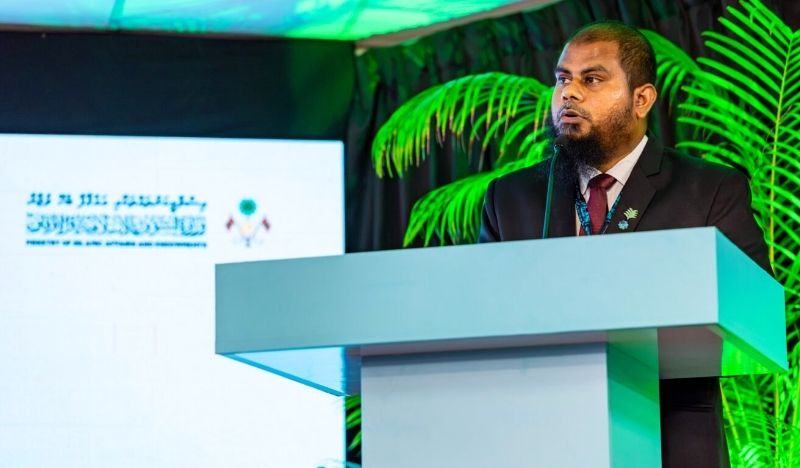
Photo: Maldives Zakat House
The Maldives Zakat House launched the third annual International Zakat Conference (INZAC 2026) in Malé today, bringing together global scholars, policymakers, and financial experts to examine the role of Islamic social finance in addressing modern socioeconomic vulnerabilities.
Held under the theme “Resilient Foundations: Deciphering Vulnerability, Economic Impact, and Collaborative Safety Nets in Modern Societies,” the conference focuses on the evolving dimensions of contemporary poverty and on creating coordinated safety nets among public institutions, the private sector, and civil society.
advertisement

advertisement

Three international keynote speakers slated to address the conference include Professor Dr Amir bin Shaharuddin, Director of the Centre of Excellence in Islamic Social Finance at INCEIF University; Associate Professor Dr Fuadah binti Johari of Universiti Sains Islam Malaysia; and Yusuf bin Ahmad, Deputy Chief Distribution Officer at the Kedah State Zakat Board.
Discussions throughout the sessions centre on shifting household vulnerabilities, mitigating financial shocks, inter-agency data sharing, and international models designed to transition welfare recipients from financial dependency to long-term economic self-sufficiency.
Speaking at the opening ceremony, Director General of Maldives Zakat House Sheikh Mohamed Imthithaau Abbaas stated that changing lifestyles have altered both the definition of poverty and the pathways through which families experience financial distress, noting that economic pressures increasingly impact middle-income households. He expressed confidence that insights shared by Islamic scholars and policy experts would provide practical frameworks for poverty alleviation in the Maldives.
The Director General also expressed appreciation to the Minister of Islamic Affairs and Endowments, Dr Mohamed Shaheem Ali Saeed, for his steadfast leadership and guidance, noting that ministerial support has been instrumental in institutional development and nationwide efforts to modernise zakat administration.
Minister Dr Shaheem was unable to attend the conference in person due to an official visit abroad, with his message presented at the opening ceremony by Maldives Zakat House Assistant Zakat Officer Ashiya Salih.
In an official address delivered on his behalf, Minister of Islamic Affairs and Endowments Dr Mohamed Shaheem Ali Saeed emphasised that zakat serves as a vital instrument of social justice and poverty alleviation rather than merely a financial obligation, urging stronger governance, transparency, and international cooperation across zakat systems.
Describing zakat funds as a sacred trust that demands strict adherence to Islamic principles, the Minister noted that sound governance and institutional integrity remain vital to maintaining public trust. He highlighted the passage of the Zakat Act and the establishment of the Maldives Zakat House as critical legislative milestones, while calling on international scholars and institutions to expand cross-border partnerships to address shared welfare challenges.
The opening ceremony also marked the official unveiling of the Maldives Zakat House’s Strategic Plan, launched by Commissioner General of Taxation Fathimath Ameeza.
Detailing institutional reforms, Director General Sheikh Mohamed Imthithaau Abbaas highlighted the agency’s Strategic Action Plan (SAP 2026–2028), structured around four primary pillars and nine strategic goals designed to enhance stakeholder engagement, financial outcomes, operational efficiency, and institutional growth.
Under the Strategic Action Plan, the Director General outlined two primary objectives, focusing on boosting revenue through corporate Zakat al-Maal partnerships and developing waqf real estate assets such as Dar al-Arqam and Dar al-Salam to generate sustainable long-term income.
To establish a transparent and standardised operational framework, the Maldives Zakat House has formulated 21 operational regulations and three institutional standards aimed at reinforcing legal protections, consistency, and fairness for payers, beneficiaries, and key stakeholders.
The conference forms part of wider ongoing institutional reforms, following the ratification of the nation’s first Zakat Act in December and the establishment of the Maldives Zakat House to expand welfare assistance, medical aid, and educational support nationwide.