September 2, 2026
Driven 'Senseless': Death After Death on the Roads




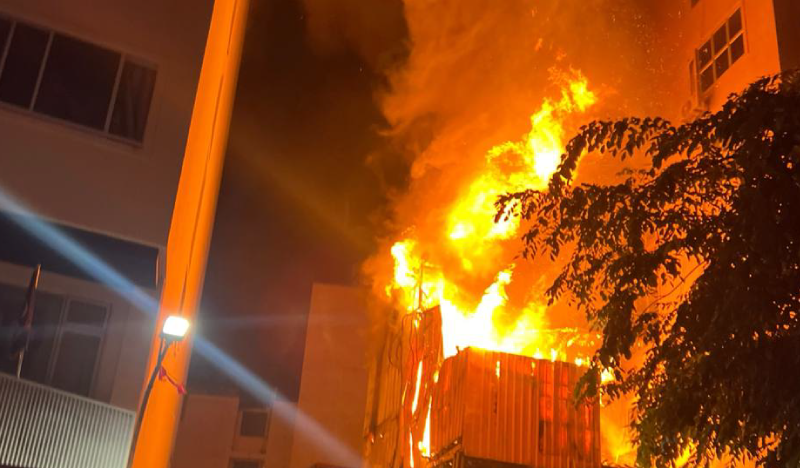
The illegal chemical warehouses tucked away within Malé’s congested streets and densely populated residential quarters are effectively ticking time bombs. Historically, the city’s most devastating fires, particularly those resulting in mass casualties, have broken out in these very storage facilities. We have witnessed countless lives cut short, families displaced overnight, and lifetimes of hard-earned savings and property reduced to ash in mere seconds.
While the trauma of these tragic events still lingers, we must confront a pressing question: who bears the responsibility for this irreparable damage? Is it the businessmen running these unauthorised warehouses? Is it the state enforcement agencies who failed to shut them down despite being aware of their existence? Or is it the community members who knowingly live alongside and on top of these hazards without alerting the relevant authorities?
Driven solely by commercial profit, those who store hazardous chemicals in residential areas without safety measures, and in open defiance of regulatory bodies, show a blatant disregard for human life. This is not just a case of negligence; it is a direct criminal threat to public safety.
A History of Catastrophe
Some of Malé’s most catastrophic fires have been traced back to unregulated chemical warehouses operating in residential zones. Notable incidents include:
March 2017 – The Coach Maldives Warehouse Fire: This outbreak in a Machangolhi chemical store caused severe widespread damage and massive property loss for neighboring residents.
20 September 2019 – The Abadhahfehi Magu Disaster: This remains the most terrifying fire in recent Maldivian history. Incineration originating at the H. Green Path chemical warehouse rapidly spread to four nearby warehouses and six homes. Ultimately affecting around 15 households, the disaster claimed one life, displaced over 400 people, and instantly wiped out the life savings and assets of many families.
Inadequate Enforcement and Regulatory Loopholes
Following the tragedy at Abadhahfehi Magu, the government initiated efforts to relocate warehouses from Malé to Thilafushi. The Maldives National Defence Force (MNDF) conducted extensive inspections, and the administration at the time decided to move more than 120 chemical stores out of the capital. According to the MNDF, over 80 of these units were located either adjacent to residential homes or directly beneath apartment buildings. In response, 34 temporary warehouses (each roughly 1,000 square feet) were constructed in Thilafushi.
Legal frameworks were also tightened. To secure a chemical import license, businesses were legally mandated to prove they possessed a secure storage facility. Storing hazardous chemicals of any kind in Malé was strictly banned. Furthermore, the Ministry of Defence announced it had registered all chemical importers and handlers, promising regular oversight inspections.
Despite these measures, a fire during this past Ramadan at a Prime Fertilisers warehouse, which stored various fertilisers, pesticides, and agricultural chemicals, has led the public to question the actual efficacy of government enforcement.
Local observers point out that numerous chemical warehouses continue to operate covertly across Malé. They allege that while some companies have acquired units in Thilafushi, they do so merely as a front to satisfy licensing requirements and deceive regulatory bodies. To avoid high transport costs, many reportedly continue to use Malé for bulk storage.
The Regulatory Flaw: Industry insiders point out that current regulations permit chemicals to be brought into Malé for immediate retail and distribution. Consequently, even with facilities in Thilafushi, high volumes of chemicals are regularly transported back into the capital for sale. Vendors argue that without a localised distribution alternative, it is impossible to conduct business. However, the existing regulations fail to define the maximum volume allowed in Malé at any one time, or the maximum quota permissible per business.
Furthermore, while current laws stipulate that any chemical handling in Malé must take place far from residential areas, the capital lacks a dedicated zone for this. Although an Industrial Zone was developed on the southern waterfront specifically to house such warehouses and garages, shifting political policies across successive administrations have left the area entirely underutilised.
Health Hazards: The Fatal Risks Hidden in Smoke
The toxic smoke and gases released during chemical warehouse fires represent far more than a temporary inconvenience; they trigger severe, long-term health crises for the population.
Inhaling the toxic smoke generated by burning chemicals causes immediate respiratory damage, leaving the public highly vulnerable to acute asthma attacks and chronic respiratory conditions like bronchitis. The long-term implications are even more sinister. Many stored chemicals release carcinogenic (cancer-causing) agents into the atmosphere when ignited. Prolonged exposure significantly increases the risk of irreversible damage to vital internal organs, including the heart, brain, liver, and kidneys.
Additionally, the toxic fallout from these fires can lead to severe vision impairment and chronic skin diseases. The most vulnerable segments of our population—children, the elderly, and pregnant women—face the highest risk. Exposure to these hazardous gases during pregnancy can severely disrupt fetal development, potentially leading to major congenital disabilities at birth.
Strict Punishments Must Be Enforced
Given the devastating health and economic toll inflicted on our community, the argument for severe punitive action against violators is clear. Operating hazardous chemical stores in residential areas places innocent lives on the line. Beyond the immense financial devastation, the psychological trauma inflicted on affected families is immeasurable.
Perpetrators of such high-stakes violations must not be allowed to escape accountability by paying minor, token fines. Implementing strict criminal penalties is the only effective deterrent to prevent others from repeating these dangerous practices in the future.
It is now abundantly clear that regulatory bodies cannot simply stop at drafting policies on paper. They must actively enforce these laws, root out illegal chemical operations, file criminal charges, and ensure that violators face the maximum penalties allowed by law. Legal frameworks must be strengthened, and enforcement agencies must adopt a far more rigorous approach to oversight.
No business or commercial profit should ever take precedence over public safety. Justice for the lives lost in Malé’s warehouse fires, and for those condemned to a lifetime of chronic illness, can only be achieved when negligent operators face the full force of the law. This is the only way to safeguard our community against future tragedies.