September 2, 2026
Driven 'Senseless': Death After Death on the Roads



The most beautiful and fundamental principle of democracy is electing the most capable and honest individuals to leadership and public office, ensuring the collective welfare of the people. However, as each election approaches, our society witnesses a deeply concerning and disheartening trend.
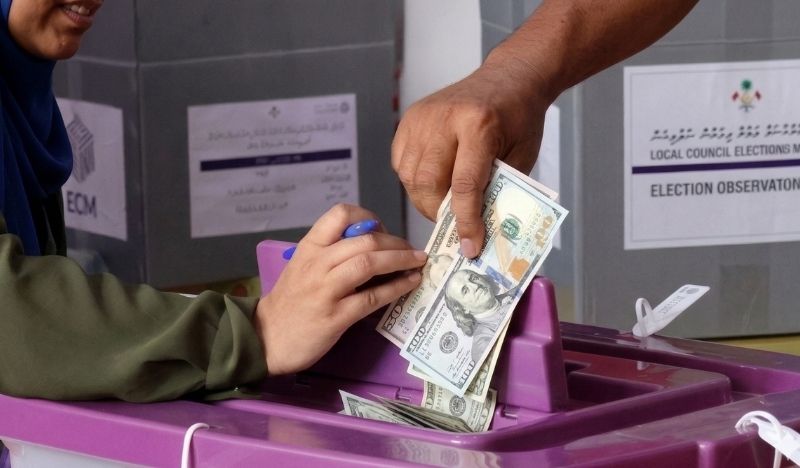
Historically, it was politicians who took the initiative to distribute cash and gifts to voters. Today, the tables have turned. The situation has deteriorated to the point where citizens themselves are actively approaching candidates and begging for bribes. This is a profound social and political shift that demands serious reflection.
Economic Hardship and the Allure of Short-Term Gain
One of the primary drivers behind this toxic habit taking root in society is the sheer economic hardship facing ordinary citizens. The soaring cost of living, coupled with the struggle to pay rent and utility bills, has placed an immense financial burden on the average household. Very few people manage to make ends meet on their regular income. Instead of living within their means, nearly everyone is drowning in debt.
Under these circumstances, elections have come to be viewed by many as a financial "bonus". A ready cash handout of £250 or £500 (MVR 5,000 or MVR 10,000) today is deemed far more valuable than a long-term manifesto promise meant to stretch across a five-year term. While many are driven to this out of sheer necessity, the ultimate consequences are disastrous.
Voters no longer hesitate to approach candidates for handouts, and some even openly broadcast their financial demands on social media. Despite knowing that bribery is a crime, the complete lack of enforcement by regulatory bodies means ordinary citizens simply do not care anymore.
Erosion of Trust in the Political System
The flip side of this issue is the total collapse of public trust in politicians and the wider political system. Having witnessed countless broken promises in the past, and watching elected officials focus solely on self-enrichment, citizens have come to see elections as their only golden opportunity to extract tangible benefits by selling their votes.
The general perception is that politicians seek office purely for personal gain—a view validated by the rapid wealth accumulation typically enjoyed by those who win public office. Watching politicians grow wealthy while essential public services remain neglected encourages citizens to prioritise their immediate personal gain over broader policy platforms. Asking candidates for cash or household appliances was always a common practice, but it has now lost all sense of shame. A vote is no longer viewed as a civic duty; it has been downgraded to a commercial transaction.
The Damaging Impact on Society and the Nation
When citizens actively demand bribes, the entire democratic framework becomes corrupted. Educated, capable, and honest candidates who lack the financial means to hand out cash are effectively locked out of the race.
Consequently, candidates who buy their way into office will naturally focus on recovering their campaign expenses once elected—either through the state budget or other illicit means. This cycle of bribery and corruption directly derails essential public services and development projects. Elected officials often seek unlawful kickbacks from these initiatives, leading to project delays and total standstills. Ultimately, the entire community pays the price—including those who accepted the bribes in the first place.
Shameless Government Interference
Candidates are not the only ones offering "bribes" during election seasons. Incumbent governments routinely abuse state resources and influence to secure wins for their preferred candidates. This pattern has been evident across successive administrations.
During the previous government, millions of Rufiyaa were funneled into unbudgeted projects specifically to secure a by-election victory in the Komandoo constituency. The current administration is practicing the exact same tactics. Despite President Dr Mohamed Muizzu’s repeated assurances that state decisions are not tied to election cycles, foundation stone-laying ceremonies for new projects spike dramatically ahead of polls. Public sector jobs are handed out en masse, and state-owned enterprises are heavily utilised to sway voters.
While policies like rent waivers may seem beneficial to the public, they impose an unsustainable financial burden on the state. Similarly, while creating mass employment provides temporary relief to families, allowing the state budget to spiral out of control inflicts long-term damage on the entire economy.
The Bottom Line: Begging for election bribes is tantamount to sacrificing the nation’s future with our own hands. To break free from this dangerous cycle, state institutions must tighten legal frameworks and rigorously enforce the law.
However, the most crucial step is shifting public mindset: citizens must understand that a vote is not a commodity for sale, but the greatest power an individual possesses to shape the nation's future. We cannot fix this crisis simply by blaming politicians. True national reform will only happen when citizens change their own attitudes and actions.