September 2, 2026
Driven 'Senseless': Death After Death on the Roads




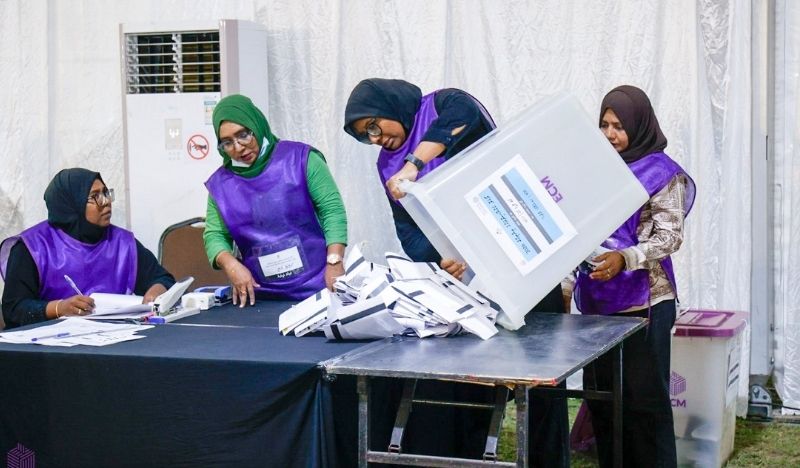
The Maldivian political landscape is currently presenting an extraordinary, yet remarkably clear, picture. The outcomes of the recently concluded referendum, local council elections, and Women’s Development Committee (WDC) elections have delivered a firm and unusual message to the nation’s political leaders. It serves as a stark reminder that elections cannot be won solely on the backs of party members.
It highlights the bitter consequences of loudly promising during campaign season to govern for all Maldivians, only to restrict all the benefits of governance to party loyalists once in power. The electorate has roundly rejected the counterproductive policy of sidelining the broader public to prioritise only the party’s inner circles and influential political dynasties.
Summary of Results: A Severe Blow to the Government
Looking at the provisional results, these elections represent a major setback for the ruling administration—though they do not necessarily signal a wholesale victory for the opposition either.
* **The Referendum Outcome:** A substantial majority of the public voted ‘No’ to the government’s proposal to consolidate two separate elections.
* **The City Councils:** The government faced defeat across all five cities. In Malé, the opposition secured the mayoralty and snatched 16 out of 18 council seats, leaving the government with just two. The story was much the same in Addu, Fuvahmulah, Kulhudhuffushi, and Thinadhoo.
* **Island Councils and WDCs:** Despite heavy state spending and job creation ahead of the vote, the government lost a significant number of island council presidency and women's committee seats.
The Battle for Credit: What is the Reality?
Following the announcement of the results, political parties immediately locked horns in a debate over who could rightfully claim victory. However, the data and the ground reality tell a very different story.
1. The Role of the MDP and President Nasheed
Some supporters of the opposition Maldivian Democratic Party (MDP) are placing the crown of victory squarely on the head of former President Mohamed Nasheed. They credit his campaign tours and personal charisma as the turning point that tipped the scales.
Yet, this theory faces some serious question marks. The MDP suffered historic defeats in its traditional strongholds—islands like K. Maafushi, AA. Ukulhas, and AA. Rasdhoo—which the party historically champions as the birthplaces of local tourism. Despite President Nasheed personally visiting and campaigning on Maafushi, the ruling People’s National Congress (PNC) won both the council presidency and a majority on the island. Furthermore, the PNC swept every single seat in Rasdhoo, a fortress controlled by the MDP for the past 20 years. This proves that full credit for this success cannot simply be handed to President Nasheed or the MDP.
2. The PNF and President Yameen’s Perspective
Supporters of former President Abdulla Yameen (most notably Dr Mohamed Jameel Ahmed) view these results as proof that the incumbent, President Dr Muizzu, lacks genuine public support without Yameen by his side. They have framed the outcome as the revenge of the "empty chair".
However, this narrative also lacks weight. The People’s National Front (PNF) did not field candidates under its own banner, and independent candidates backed by the party—such as Malé mayoral contender Ismail Zariyandhu—suffered crushing defeats. Therefore, there is little ground to argue that the results were driven by a PNF support base.
3. The Government’s Defence: "A Message for Reform"
The government has taken a highly disciplined approach to interpreting the results. Officials claim the vote is a constructive message from the public to accelerate state machinery and fix internal issues. They also view capturing long-standing MDP strongholds like Ukulhas as a notable breakthrough for the PNC. While this is a clever political spin to minimise damages, looking at the bigger picture, this election was undeniably a bruising test of public confidence in the administration.
The Real Lesson: A Highly Aware Electorate
Held two and a half years into the government's term, this was a classic midterm election—a direct referendum on the popularity of the government and President Muizzu himself.
Statistically, of the 73 per cent of voters who turned out, nearly 70 per cent (over 146,000 people) rejected the government's referendum proposal. Only 31 per cent voted in favour of the administration's request.
The most surprising and profound truths to emerge from this election are two-fold:
Principles over Patronage: In the run-up to the election, the government handed out numerous jobs, laid foundation stones for countless projects, initiated land reclamation schemes, and poured hundreds of millions of Rufiyaa into the campaign. Ordinary citizens may have marched in rallies out of fear for their livelihoods and pasted up government posters, but once they stepped inside the voting booth, they marked their ballots according to their own conscience.
A Discerning, Split Vote: In many islands where voters handed council majorities to government candidates, those same voters turned around and voted against the government on the referendum ballot. This demonstrates that the outcome was not driven by blind partisan anger, but rather by an electorate that thinks deeply and evaluates issues case by case.
Furthermore, because the government lost the referendum heavily but still won the overall popular vote in the council elections, it is clear that no single political party can claim outright dominance.
Govern for the People, Not the Party
The results of this election prove that Maldivians are politically mature. Today, the public prioritises the reality of the economy, fundamental rights, and the fulfilment of state pledges far above monetary handouts, job intimidation, or flashy promises of development.
This was not a triumph for any individual political leader. It was a warning shot—a powerful message delivered by the Maldivian people to all political parties and leaders. Politicians may scramble to take credit for the fruits of this election, but the electorate has made one thing abundantly clear: a government must serve all Maldivians, not just its own party members.
Instead of squabbling over the spoils of the vote, both the government and the opposition need to respect the independent mind of the public and start listening. This was not a win for any political faction; it was a definitive lecture delivered by the people to the entire political establishment.