September 2, 2026
Driven 'Senseless': Death After Death on the Roads




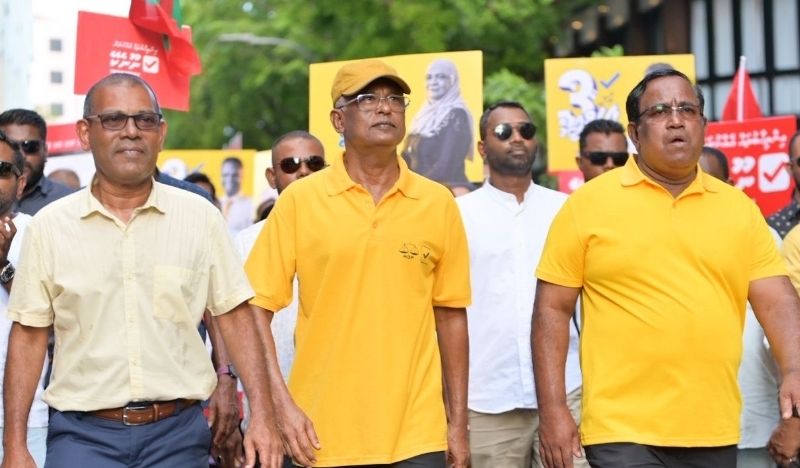
Internal elections within the Maldivian Democratic Party (MDP) have always been high-stakes, fiery affairs, characterized by intense campaigning between various factions. However, unlike in the past, the MDP has recently fractured into two distinct camps. These two factions are built around the party’s two most prominent figures: Ibrahim Mohamed Solih and Mohamed Nasheed (Anni). The upcoming chairperson election, scheduled for next month, is shaping up to be yet another battleground for this bitter factional rivalry.
Former President Nasheed, who has filled key party leadership roles for years, is currently running a powerhouse campaign for the chairperson seat. His opponent is Mickail Ahmed Naseem, who is serving his second term as the MP for the Galolhu South constituency. Word on the street is that Mickail is President Solih’s factional candidate. Both contenders are dedicated party loyalists who have made immense sacrifices for the MDP since their youth.
Echoes of the Past
The most heated debates on the campaign trail center around the party's turbulent history. One side argues that MDP failed to secure a consecutive second term in government because of President Nasheed and his staunch loyalists. The ideological rifts that surfaced early in Solih's presidency eventually turned toxic. This culminated in Nasheed leaving the MDP to form a new party, issuing a stark warning that he would "dismantle" the MDP.
Consequently, during the 2023 presidential election, the newly formed party—The Democrats—withheld official endorsement for the current President, Dr. Mohamed Muizzu, but their refusal to back Solih and the resulting splintering of the MDP became the primary reasons Solih lost his bid for a second term.
After The Democrats struggled to gain traction, President Nasheed and its senior leadership ultimately returned to the MDP fold. Now, as Nasheed launches a bid to reclaim the party’s reins, ghosts of the past are being dragged up by both sides. Some blame Nasheed entirely for the threats to dismantle the party, the loss of the second term, and the current hardships faced by ordinary grassroots members. Nasheed, however, counters that dwelling on the past yields no progress and secures no future. Yet, despite his words, it is precisely the shadow of the past that looms largest over this election.
More Than Just a Chairperson Campaign
Intriguingly, several figures who stood shoulder-to-shoulder with Solih during his presidency have now switched sides to align with Nasheed. The most notable among them is former party Chairperson Fayyaz Ismail. Back when Fayyaz ran for chairperson while serving as Economic Minister, Nasheed and his supporters were his fiercest critics. In that election, Nasheed backed the then-MP for Maafannu North, Imthiyaz Fahmy, and Fayyaz was pelted with heavy criticism, hit with numerous corruption allegations, and mocked as a self-styled political "bro."
Given that history, the question arises: why has Fayyaz crossed over to Nasheed’s side?
According to political observers and current indicators, the driving force is the 2028 presidential election. Nasheed has publicly stated he will endorse Fayyaz in the MDP presidential primary. Furthermore, looking at the structural reforms proposed by the duo under the banner of a "Grand Change," many believe the constitutional amendments are designed to pave the way for Nasheed to assume executive governing power.
On the flip side, Solih’s actions suggest he has no intention of backing down. While he has not officially declared his candidacy for the presidential primary, his keen interest remains an open secret. Even if he chooses not to run, it is widely expected he will put forward a proxy candidate. Therefore, Fayyaz’s strategic shift away from Solih and toward Nasheed is deeply intertwined with these presidential ambitions.
A Fierce War of Words
While Nasheed and his allies maintain that looking backward is counterproductive, past grievances dominate the campaign discourse. For Nasheed’s opponents, this history is political gold. Snippets of past speeches where he threatened to dismantle the party, combined with his Parliamentary criticism of the previous MDP government, are potent weapons. Nasheed’s supporters must realize that these archives will be weaponized against them, whether they like it or not. Conversely, Nasheed’s loyalists refuse to admit that past actions were a mistake, resulting in a rhetorical crossfire that is more intense than ever.
The clearest proof that old wounds remain unhealed is that even Fayyaz is finding it difficult to look past them. Despite currently working alongside Nasheed, recent events show that old grievances still sting. Fayyaz recently delivered a scathing response to a social media post by former Dhuvaafaru MP Mohamed Waheed (Wadde), one of Nasheed’s closest confidants.
Writing on X, Wadde claimed that the previous government—built on the backs of 95% of MDP members—gave 60% of its cabinet slots to coalition partners, attempted to give away 55% of parliament seats, and that Solih failed to even meet with the MDP National Council by the end of his term. Wadde questioned who truly weakened the MDP by failing to deliver on its grand pledges. Fayyaz hit back sharply at the post (which has since been deleted), stating that Wadde himself was responsible for weakening the party. He pointed out that while sitting as an MDP MP, Wadde was one of the loudest critics of Solih, Fayyaz, and the administration of the day.
"There is no progress for MDP in seeking retribution for past hurts. Yet, the pain of those hurts remains, the memory remains. What I want is a way forward. To reclaim the nation. And that can only be achieved together," Fayyaz stated.
Fayyaz's remarks drew immediate fire from Nasheed’s camp, with some questioning why he was publicly criticizing members of his own team.
At the same time, key figures in Nasheed's campaign have taken jabs at Mickail. Notable among them is Solih’s former Defence Minister, Mariya Didi. Responding to Mariya’s remarks, Mickail urged against using derogatory language toward Nasheed and his supporters, reminding everyone that once the chairperson election concludes, they must work together as a unified front to win the 2028 presidential election for the MDP.
The Ripples Heading into 2028
Some political analysts believe the MDP should decide its presidential primary concurrently with this chairperson election. Their logic is that settling the current factional infighting will take considerable time. If the primary is held too close to the actual presidential election, the internal friction will bleed into the national campaign. Therefore, they argue it is wiser to choose a candidate early and begin national campaign preparations immediately.
Nevertheless, the bitterness of the current race is bound to spill over into the presidential primary. With Fayyaz already signaling his intent to run in the primary backed by Nasheed's endorsement, another fierce factional showdown is on the horizon.
However, some view this dynamic as highly fluid. Should Nasheed secure the chairmanship, the landscape of the presidential primary could shift dramatically.
Ultimately, the upcoming chairperson election is more than just a vote for an administrative leader; it is a referendum on the future trajectory and philosophy of the party. The MDP’s internal fractures will take time to heal, and the tremors of this clash will be felt all the way to the next presidential election. Most agree that for the MDP to be victorious in 2028, the factional warfare must end. The ultimate question is whether the two figures vying for the party's leadership have the capacity—or the will—to broker that peace.