September 2, 2026
Driven 'Senseless': Death After Death on the Roads




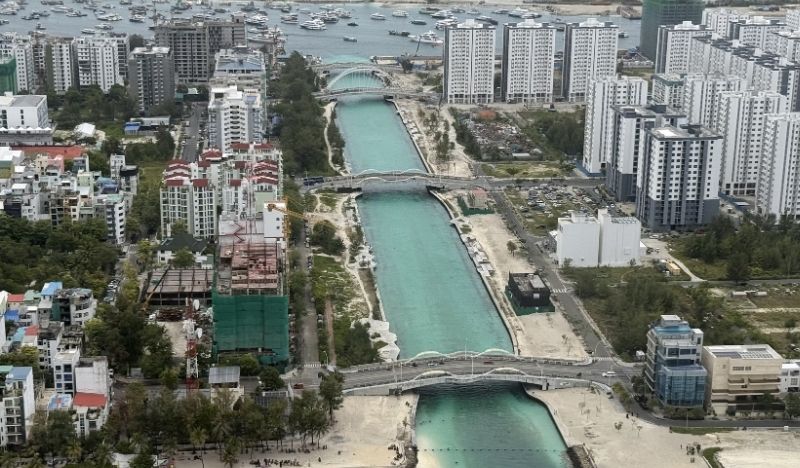
When considering individual islands, the Maldives' largest population no longer resides in Malé. Current statistics and estimates show that the combined population of Hulhumalé’s first two phases significantly exceeds that of the capital city.Yet, because administrative structures group Hulhumalé within the Greater Malé Region, municipal matters fall under the Malé City Council (MCC). Meanwhile, overall control remains with the Housing Development Corporation (HDC)—the state-owned enterprise that holds legal ownership of Hulhumalé’s land.Despite its booming size, Hulhumalé remains administratively disenfranchised. This begs the question: isn't it time to expand its representation within the MCC, or better yet, establish a completely independent local council?
A Rapidly Growing Population
Hulhumalé is the primary location for ongoing housing projects across Greater Malé, driving rapid population growth across Phase 1 and Phase 2. With Phase 3 developments currently underway, the population is set to surge over the next five years.
Hulhumalé Population Projection (Estimated)
┌─────────────────────────────────────────────────────────┐
│ Registered Voters (2024 Election) : < 9,000 │
│ Census Count (2022 Data) : ~65,000 │
│ Current Estimate (2026) : ~150,000 │
│ 5-Year Projection (with Phase 3) : ~200,000 │
└─────────────────────────────────────────────────────────┘
During the local council elections held earlier in 2024, fewer than 9,000 voters over the age of 18 were officially registered across Hulhumalé’s three constituencies. However, census data published by the Maldives Bureau of Statistics in 2022 recorded over 35,000 residents in Phase 1 and roughly 30,000 in Phase 2.
Following subsequent housing allocations and private residential move-ins, current estimates place the population across both phases at around 150,000. Once the reclaimed Phase 3 is fully developed, that figure is projected to reach 200,000 within five years.
By comparison, Malé’s resident Maldivian population stands at roughly 100,000—rising to around 140,000 when including expatriates. While Malé’s population growth has largely plateaued, Hulhumalé will continue to grow exponentially.
Administrative Imbalances
Hulhumalé is the largest island in Greater Malé by both land area and total residents, yet it is administratively the most underserved. Residents face structural inequality in basic municipal services and political representation.
Primary Decision DriverPublic Interest
Commercial Operations Because authority is split between a commercial corporation (HDC) and a city council (MCC), legal and operational responsibilities constantly overlap. Issues routinely flare up around road maintenance, waste management, and basic day-to-day services. For residents, this split authority creates endless bureaucratic confusion—forcing them to navigate a ping-pong match of accountability between HDC and the MCC for simple administrative requests.
The Representation Gap
In national and local elections, Malé is allocated 19 seats across parliamentary and municipal districts. By contrast, Hulhumalé—despite housing a larger overall population—is allocated just three seats. Authorities argue that this discrepancy exists because most Hulhumalé residents remain registered in their original island constituencies. However, this argument ignores systemic barriers:
* Registration Hurdles: Transferring official permanent registry to the Malé region is notoriously difficult.
* Property Ownership Red Tape: Even after receiving flat allocations or buying private land in Hulhumalé, residents face administrative roadblocks when trying to update their address.
* Institutional Friction: Disagreements between HDC, the Fahi Dhiriulhun Corporation (FDC), and the MCC have left thousands of flat owners (such as recipients of recent social housing projects) stranded in administrative limbo.
Proposed Legal Reform
To address address-registry lock-in, opposition MP Mohamed Ibrahim (Kudu) recently introduced a bill in Parliament to streamline registry transfers upon legal acquisition of property (via inheritance, purchase, gift, court order, or state housing schemes).
Proposed Registry Reform Process
┌──────────────────────────┐ ┌──────────────────────────┐ ┌──────────────────────────┐
│ Legal Title Acquired │ ──>│ Habitability Verified by │ ──>│ Registry Updated Without │
│ (Purchase/Grant/Inherit) │ │ Relevant Authority │ │ 5-Year Residency Rule │
└──────────────────────────┘ └──────────────────────────┘ └──────────────────────────┘
Although government MPs rejected the bill during debates, South Hulhumalé MP Dr Ahmed Shamheed argued that tying civil rights to an individual's historical home island is an outdated concept that violates constitutional guarantees of equal treatment. A direct consequence of this system is that Hulhumalé remains vastly underrepresented in both Parliament and the City Council.
Structural Challenges for the City Council
Managing Hulhumalé from across the water presents physical and logistical challenges for the Malé City Council. Although connected by the Sinamalé Bridge, the MCC’s operational resources, depots, and administrative offices remain based entirely in Malé.Furthermore, the Decentralisation Act was designed to bring governance closer to communities, ensuring local people have direct control over local decisions.
Current Governance Model Proposed Governance Model
┌─────────────────────────────┐ ┌─────────────────────────────┐
│ Malé City Council │ │ Hulhumalé Local Council │
│ (Remote Municipal Services)│ │ (Dedicated Local Services)│
├─────────────────────────────┤ ├─────────────────────────────┤
│ Housing Development Corp. │ │ Housing Development Corp. │
│ (Commercial / Land Owner) │ │ (Purely Commercial) │
└─────────────────────────────┘ └─────────────────────────────┘
Hulhumalé is a master-planned modern city with development requirements fundamentally different from traditional island layouts. A commercial enterprise naturally operates under different incentives than an elected council.
For instance, Hulhumalé hosts one of the largest concentrations of guesthouses and local tourism infrastructure in the Maldives. Allowing a state-owned corporation to regulate these businesses creates inherent conflicts of interest.
Establishing an independent local council for Hulhumalé would allow locally generated revenue and state budget allocations to be reinvested directly into the community. While decoupling municipal governance from HDC’s land ownership requires legislative changes in Parliament, separating corporate assets from civic administration is a essential step forward.
Hulhumalé is no longer just a bedroom community built to relieve overcrowding in the capital—it is a thriving metropolis in its own right. Establishing its own local council is necessary to modernise administration, elevate service standards, and give its growing population the voice it deserves.