November 6, 2026
ނިޒާމުގެ ފެއިލްވުމެއް! އެތައް ބަޔަކު މަގުމަތީގައި!





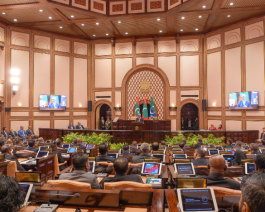
Public indignation is mounting. From contentious decisions taken on the floor of the People’s Majlis to pay rises for top state officials, widespread frustration is growing over the country’s current trajectory. Yet beneath the anger lies an uncomfortable truth: the primary responsibility rests with the electorate itself. With the decisive power of the ballot paper in their hands, voters routinely overlook merit and qualifications, swept along instead by partisan loyalties and short-term patronage when sending representatives to Parliament.
Members of Parliament in the Maldives enjoy outsized privileges and prestige. Following the adoption of the 2008 Constitution and the advent of a multi-party system, the stature of the legislature grew exponentially. Although the Constitution explicitly enshrines the separation of powers, this principle has steadily unravelled: the executive seeks to co-opt Parliament, while Parliament meddles in the executive domain, throwing the entire constitutional architecture off balance.
It is hardly surprising that many MPs behave as though they answer to no one. Cloaked in institutional privileges, handsome salaries, generous perks, and political leverage, lawmakers have become an elite class. And yet, this status was conferred on them by the voters who put them there.
The Power of Choice — And How It Is Squandered
Citizens possess the absolute authority to choose who represents them. But how many exercise that choice conscientiously? And what criteria truly guide the voter’s hand?
No matter how qualified, principled, or educated an independent candidate might be, electoral prospects are overwhelmingly dictated by partisan clout. Whichever political party rides the prevailing national tide commands an enormous electoral advantage. The rot, however, begins well before general elections. Party tickets are rarely awarded on academic merit, integrity, or competence. Instead, internal primary contests hinge on personal proximity to party leadership, access to political patronage, or financial muscle.
Excluded from party machinations, many capable and principled individuals run as independents. They present thoughtful manifestos, campaign on their professional qualifications, and refuse to align themselves with political patrons. Yet, when polling day arrives, voters overwhelmingly default to mainstream party nominees, populating the legislature with party loyalists regardless of their calibre.
From Lawmakers to Political Puppets
The current Parliament is not entirely devoid of talent; it counts seasoned politicians, educated professionals, and energetic young figures among its ranks. Yet once through the chamber doors, their individual voices fade into silence. Lawmakers find their tongues effectively tied.
In the 20th Majlis, meaningful debate has become the preserve of a tiny cohort. Over the course of an entire legislative year, only a handful of MPs are ever given the floor to debate substantive bills. With the ruling party wielding a commanding supermajority, legislative agendas and proceedings are micromanaged from the very top of the party hierarchy. The result is a legislature where dissenting views are extinguished and those allowed to speak can be counted on one hand.
Public disillusionment is understandable. Although elected to represent ordinary citizens, MPs appear powerless to advocate on their behalf. Floor speeches simply parrot the party line. Dissent is actively penalised: this Parliament passed constitutional amendments allowing parties to unseat lawmakers who break ranks, effectively shackling MPs to the whims of party leadership.
"The reality today is that the public harbours profound misgivings about the People’s Majlis, particularly during this 20th parliamentary term," remarked MP Mauroof Zakir, opposition Maldivian Democratic Party (MDP) member for the Kendhoo constituency, during a recent parliamentary sitting. "This assembly has failed to address the pressing crises facing ordinary citizens. Its conduct continues to erode public trust. By concentrating the power to dismiss elected lawmakers into the hands of a single political authority, and by curtailing constitutionally guaranteed rights to consolidate power, MPs have, in essence, fashioned their own noose."
Self-Serving Governance: Deciding Their Own Pay
Under the constitutional framework, MPs hold the authority to determine their own remuneration, benefits, and statutory allowances. That power does not stop with their own pay packets; the Majlis also sets the salaries of the President, Vice President, cabinet ministers, heads of independent oversight bodies, and the judiciary. Furthermore, parliamentary discretion dictates the entire framework of local governance, down to the remuneration of local council members.
Recently, the Majlis took steps to raise the Speaker's salary. The justification offered was administrative: because the Speaker does not sit on standing committees, they miss out on committee allowances, leaving the Speaker’s take-home pay lower than that of the Deputy Speaker and certain other MPs. To rectify this disparity, the Public Accounts Committee approved a MVR 22,000 increase, raising the Speaker’s monthly compensation to MVR 91,000.
The Public Accounts Committee also moved to boost remuneration across the executive and local government. The monthly transport allowance for cabinet ministers was increased from MVR 7,500 to MVR 17,000. Committee members argued this adjustment was necessary because salary restructuring across the judiciary and independent commissions in 2024 had caused ministerial pay to lag behind. Similarly, the committee approved pay rises for local government officials: island council presidents will see their monthly pay rise from MVR 25,500 to MVR 30,500, vice presidents from MVR 20,000 to MVR 25,000, and council members from MVR 18,000 to MVR 23,000.
Out of Step with Economic Reality
When the Public Accounts Committee pushed through these pay increases, only one member voiced opposition and voted against: Abdul Ghafoor Moosa, MP for Hanimaadhoo.
"I cannot endorse these revisions at this critical juncture," Ghafoor argued. "We must take into account the economic realities confronting the Maldives, as well as the wider global climate."
A similar attempt to overhaul high-level state salaries was mounted during the previous parliament, proposing comprehensive pay hikes across the executive, legislature, judiciary, and independent commissions. That effort was shelved following fierce public backlash, though selective revisions for the judiciary and independent bodies were quietly passed before the term ended. While those piecemeal changes created clear disparities across the state sector, the central question raised by critics—and echoed by Ghafoor—is whether an economic crisis is the appropriate moment to correct them.
An Electorate in Hardship
Ordinary Maldivians are facing acute economic distress. Volatility across the Middle East and ongoing tensions in the Strait of Hormuz have driven global energy prices skyward and disrupted supply chains. Compounded by a chronic domestic shortage of US dollars, the cost of living has soared, placing immense strain on ordinary households.
Against this backdrop, awarding substantial pay increases to senior officials without offering any economic relief to the public feels less like administrative rebalancing and more like an insult to struggling families.
Yet, when the outrage subsides, accountability circles back to the ballot box. It was the electorate that voted these representatives into power. Citizens watched in silence as legislation was drafted to subjugate MPs to party whips, and stood by as decentralised governance was hollowed out in favour of central control. Time and again, ideological tribalism, nepotism, and clientelism triumph over national interest at the polling booth. If the country finds itself adrift, the ultimate responsibility lies with the voters who marked the ballot paper.