

President Muizzu Sets 70 Per Cent Completion Target for Ongoing Projects in 2027 Budget
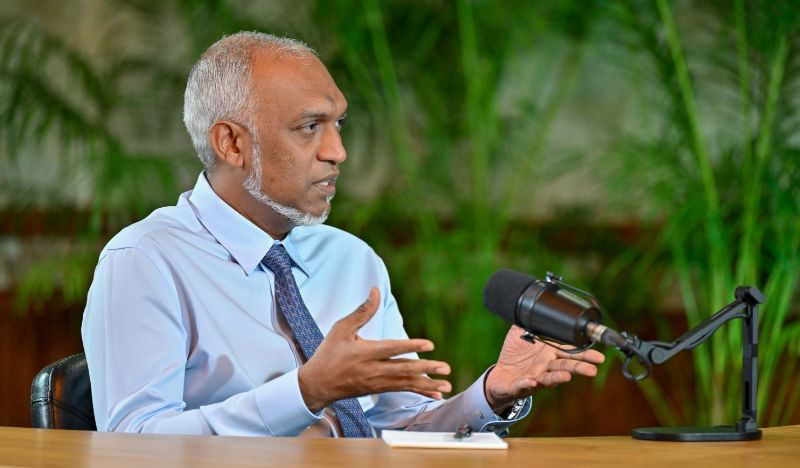
President Dr Mohamed Muizzu has announced that the core priority of the upcoming 2027 state budget will be to complete and deliver at least 70 per cent of all ongoing infrastructure initiatives nationwide.
Speaking on the sixth episode of Public Service Media’s (PSM) “Nation Chat” podcast ahead of the budget’s formal submission today, the President revealed that capital allocations will focus primarily on finishing critical basic service facilities, notably schools and regional hospitals.
advertisement

advertisement

Reflecting on macroeconomic conditions, President Muizzu said the administration inherited an economy teetering on the verge of sovereign default and insolvency, requiring immediate measures to avert fiscal collapse. He stated that those corrective actions have begun yielding tangible stabilization, noting that both gross and usable international reserves had rebounded to record levels by the beginning of the year.
The President emphasized that the administration remains heavily focused on curtailing public expenditure, narrowing the fiscal deficit, and implementing structural measures to restore fiscal discipline while exploring non-debt avenues for state revenue.
Addressing concerns over the fiscal exposure of major infrastructure works, President Muizzu maintained that active state projects, including national housing schemes are structured to prevent escalating public debt.
Specifically addressing the flagship Rasmalé reclamation scheme, the President gave assurances that development investments would not impose new debt burdens or sovereign loan obligations on the treasury, explaining that the project’s financing model relies on offsets against future revenue.
The President also acknowledged external macroeconomic headwinds, pointing out that ongoing conflicts across the Middle East have adversely affected inbound tourist arrivals and associated tax receipts.
Despite these external pressures, he maintained that national development targets are being managed within budget constraints while efforts proceed to cut operating costs and expand the state revenue base.