

Faisal and Azim Oppose Ras Malé Waterfront Project, Accuse Govt of Pursuing ‘Secret Agenda’
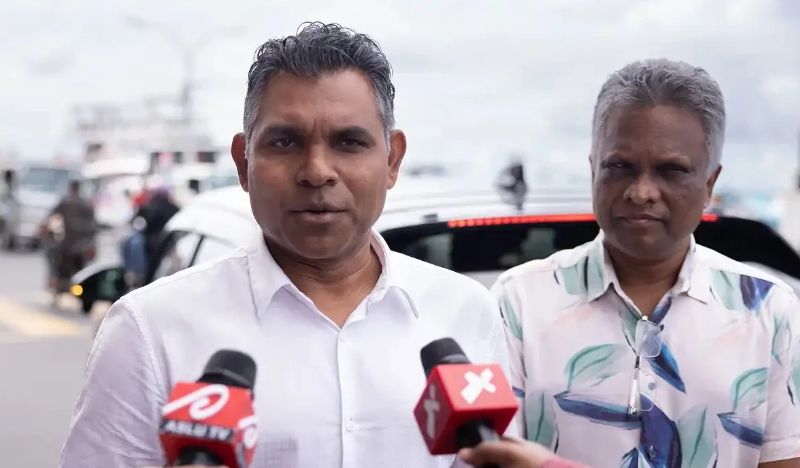
Former Vice President Faisal Naseem and Malé City Mayor Adam Azim have strongly condemned the government’s handling of the “Maldives Waterfront and Marina” project planned for Ras Malé, warning that executing the venture without public transparency threatens national sovereignty, social cohesion, and the country’s religious fabric.
The joint statement was released by the two opposition figures, who have formed a joint ticket to contest the upcoming Maldivian Democratic Party (MDP) presidential primary ahead of the 2028 presidential race.
advertisement

advertisement

Faisal and Azim asserted that all details regarding the multi-billion-dollar waterfront development in Ras Malé must be fully disclosed to the people.
Instead, they argued, the administration has operated behind a shroud of secrecy, actively suppressing public inquiry.
“To date, the government has acted on this matter not with transparency, but rather as though it is driven by a hidden, covert agenda,” the statement said, noting widespread public discontent over how the development is being pushed through.
The opposition leaders accused the government and its supermajority in the People’s Majlis of colluding to obstruct independent journalists and opposition figures attempting to scrutinize the project’s contractual and financial terms.
They cautioned that facilitating such a development risks inflicting irreversible economic, social, and cultural damage on the nation.
“Facilitating the government in this undertaking poses a serious threat of undermining the religious unity and social stability of a 100-percent Muslim nation,” the joint statement warned, stressing that moving forward with such a high-risk venture without public awareness and consent threatens the country’s sovereignty and independence.
The project, planned across reclaimed land at the Fushidhiggaru Lagoon (Ras Malé) has drawn mounting scrutiny from opposition parties, civil society, and legal experts over the lack of published concession agreements, long-term land lease terms, and the broader social and demographic implications of the development.