

Muizzu Says Maldives Has Ended Policy of Being a Foreign Nation’s ‘Puppet’
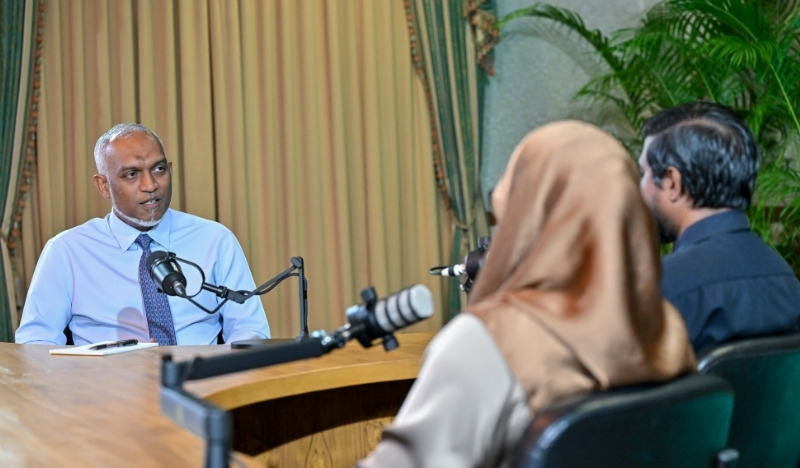
President Dr Mohamed Muizzu has declared that the Maldives will no longer act as a “puppet” of any foreign nation, claiming his administration has ended a policy of dependence on individual countries over the past three years.
Speaking on PSM’s Nation Chat podcast, Muizzu said his foreign policy prioritises regional interests and the welfare of Maldivian citizens, while maintaining balanced relations with countries without becoming involved in disputes between them.
advertisement

advertisement

“Being a puppet to a specific nation is not acceptable. It is not something the Maldivian people accept. Over the past three years, we have steadily buried and brought an end to that policy,” Muizzu said.
The President said no foreign country would be allowed to control the Maldives, militarily or otherwise, and assured that the country’s foreign policy would not adversely affect regional security.
Muizzu said he sought to maintain close relations with all countries, drawing comparisons with the foreign policy pursued during former President Maumoon Abdul Gayoom’s administration, which he described as balanced and non-aligned.
He also stressed the importance of strengthening relations with Islamic countries, describing the bond between the Maldives and other Muslim nations as enduring. He said the country would prioritise its national interests while developing diplomatic relations.
Muizzu expressed hope that regional peace would improve and meetings of the South Asian Association for Regional Cooperation (SAARC) would resume.
Debate and criticism surround government foreign policies
The President’s remarks come amid continuing debate over the Maldives’ foreign policy direction and its relationships with major regional powers. During his 2023 presidential campaign, Muizzu pledged to remove Indian military personnel from the country. His administration subsequently secured their withdrawal and ended the previous government’s hydrographic survey agreement with India.
The government has also pursued closer relations with China and strengthened diplomatic engagement with other countries, including Pakistan. Muizzu said these relationships would not require the Maldives to take sides in disputes between partner nations.
The debate over foreign influence has also extended to the proposed Ras Malé development, with critics questioning whether the government’s agreement with UAE-based Eagle Hills adequately protects national interests and sovereignty.
The main opposition Maldivian Democratic Party has demanded the full disclosure of the agreement covering 500 hectares of reclaimed land under a proposed 99-year lease, raising concerns about the financial obligations assumed by the state and whether the terms could allow foreign ownership rights in the future. Former President Abdulla Yameen has also called for a public referendum, arguing that a project of this scale should not proceed without wider consultation.
Infrastructure, Housing and Urban Development Minister Dr Abdulla Muththalib has defended the deal, saying the state will retain ownership of the land and receive revenue through property transactions, a share of the developer’s revenue and taxes.
Muththalib has also outlined safeguards to prevent Israeli nationals and Israeli-controlled entities from purchasing properties in the development.
Muizzu has separately assured the public that the project will operate under Maldivian law, with no foreign land ownership or pathway from property ownership to permanent residency or citizenship. The government says the development will bring investment, jobs and housing, while critics continue to seek greater transparency over its terms.
He reiterated that the country’s foreign policy would remain within the limits set by Maldivian national interests, saying his administration had demonstrated this approach over the past three years.