

Solih Calls for Halt to Ras Malé Project, Questions State’s Financial Returns

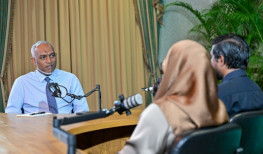
Former President Ibrahim Mohamed Solih speaking at the campaign event held on April 2, ahead of the local council and Woman’s Development Committee (WDC) elections held on April 4, 2026 | Photo: MDP
Former President Ibrahim Mohamed Solih has called on the government to halt the proposed Ras Malé development, arguing that the agreement with UAE-based Eagle Hills offers no clear financial benefit to the Maldives despite more than USD 700 million in public spending on land reclamation.
In a statement criticising the deal, Solih said the allocation of 500 hectares of reclaimed land to Eagle Hills for 99 years without an acquisition fee or land rent disproportionately benefits the developer. He questioned the commercial terms, saying the state had yet to demonstrate what financial returns it would receive in exchange for land reclaimed using public funds.
advertisement

advertisement

Solih also disputed the value of the housing component, arguing that the government would ultimately have to purchase the 5,000 housing units Eagle Hills has committed to build in Hulhumalé. He warned that the project’s current structure could expose the country to serious long-term challenges and urged the government to stop the project rather than proceed under the existing terms.
The government signed a commercial terms agreement with Eagle Hills on 21 September for the proposed Maldives Waterfront and Marina, a multi-phase development valued at more than USD 20 billion. The project covers 500 hectares of reclaimed land at Fushidhiggaru Falhu, designated as Ras Malé, and is expected to include residential, commercial and tourism facilities.
Infrastructure, Housing and Urban Development Minister Dr Abdulla Muththalib has defended the agreement, rejecting claims that the government is giving away the land for free. He said the state would receive revenue through a 10 per cent share of the master developer’s sales, a four per cent fee on property transactions and applicable taxes, including Tourism Goods and Services Tax. The government expects the project to generate more than USD 11 billion in state revenue over 10 years, according to officials.
Muththalib has also argued that the arrangement allows the state to benefit from the development without taking on the financial risks associated with borrowing or holding an equity stake in the project. He said the government would not provide sovereign guarantees or tax concessions and that proceeds from property sales would be held in an escrow account in the Maldives.
Housing commitment under scrutiny
The minister has said Eagle Hills will finance and construct 5,000 three-bedroom homes in Hulhumalé, estimated to cost USD 400 million to USD 500 million, with construction expected to begin in the first quarter of 2027. The government would take ownership of the completed units, with payments made under the agreed arrangement.
Muththalib has described the housing component as contractor-financed, with the cost to be deducted from revenue generated by the wider Ras Malé project. However, the government has not publicly detailed the final amount it will pay for the homes or fully explained how the payments will be structured. These outstanding details have become a key point of scrutiny for critics questioning the project’s overall financial benefit to the state.
Opposition raises transparency and ownership concerns
Solih’s criticism adds to opposition concerns over the financial and legal terms of the agreement. The opposition Maldivian Democratic Party (MDP) has called for the full agreement to be published, questioning the decision to grant a 99-year lease over publicly funded reclaimed land without an acquisition fee or land rent.
Former minister Abdulla Khaleel, who resigned during a major cabinet reshuffle in May, has also called for clarification on the cost of reclamation, the valuation of the land, the state’s direct revenue and the arrangements governing the 5,000 housing units. An emergency motion submitted by opposition MP Meekail Ahmed Nasym seeking disclosure of the agreement raised similar concerns, including provisions allowing the developer to lease properties to third parties. The motion was rejected by the People’s Majlis.
The government maintains that the agreement does not constitute an outright sale of Maldivian land, saying ownership of the underlying land will remain with the state. Muththalib has also said the project will not grant foreign property buyers automatic residency or citizenship rights and that property transactions will remain subject to government approval.