


Reducing Human Involvement in State Processes Will Curb Theft, Corruption, Says Shujau
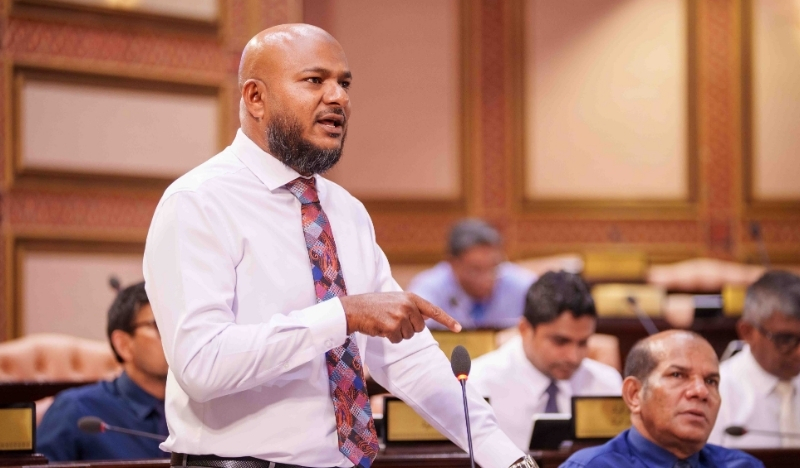
MP for Baarah and VP for the ruling party PNC Ibrahim Shujau at today’s parliamentary sitting.
The government’s proposed Digital Transformation Bill is intended to reduce corruption by limiting human intervention in state processes and has no connection to electronic voting, MP for Baarah Ibrahim Shujau said today.
Speaking during the parliamentary debate, Shujau dismissed claims by opposition MPs that the legislation could pave the way for electronic voting, stating that the bill contains no such provisions.
advertisement

“There is no mention of e-voting anywhere in this bill,” Shujau said, accusing opposition lawmakers of misrepresenting its contents.
He said the bill focuses on five key objectives: building a nationwide digital economy, fostering a digital society, enabling data sharing among state institutions, creating a paperless Maldives, and providing the legal framework needed to support these initiatives.
Shujau said the country’s move towards digital transformation began during President Mohamed Muizzu’s tenure as Mayor of Malé City and argued that technological change was inevitable.
Referring to comments made by opposition MP Abdul Ghafoor, Shujau said technologies such as CDs and flash drives that were commonly used a decade ago had become outdated as digital systems evolved.
He further argued that greater automation in government services would help reduce opportunities for corruption and fraud.
“We need to reduce human intervention in procurement. When human involvement is minimised, theft decreases,” Shujau said.
He added that providing a legal framework for digital systems would contribute to greater transparency and accountability in government operations.
The Digital Transformation bill was accepted by Parliament today, with majority of the ‘yes’ votes coming from the ruling party MPs’, and was referred to the Information and Communication Committee for further review during today’s parliament sitting.
The legislation proposes the establishment of a new entity, the Maldives Digital Service, which will operate under the Ministry of Homeland Security, Labour and Technology.
Under the bill, the institution will assume responsibility for state information and communications technology services, as well as the management of national digital infrastructure and networks.