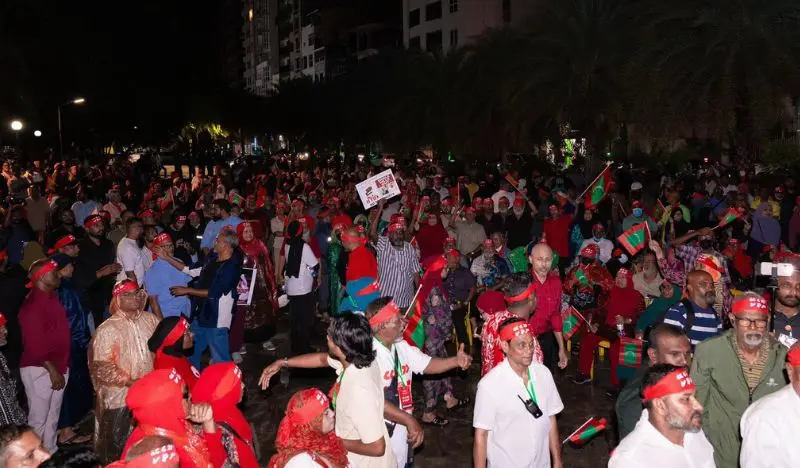

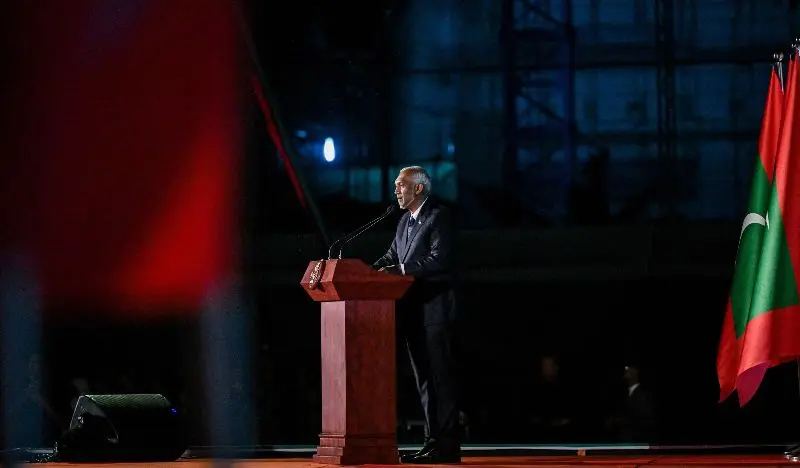
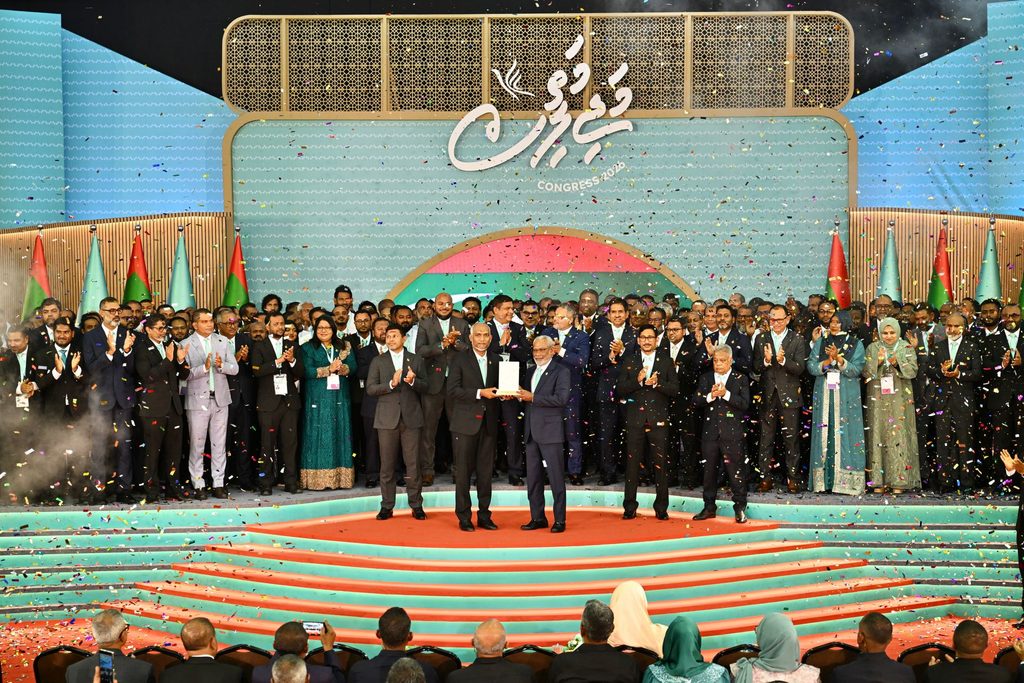
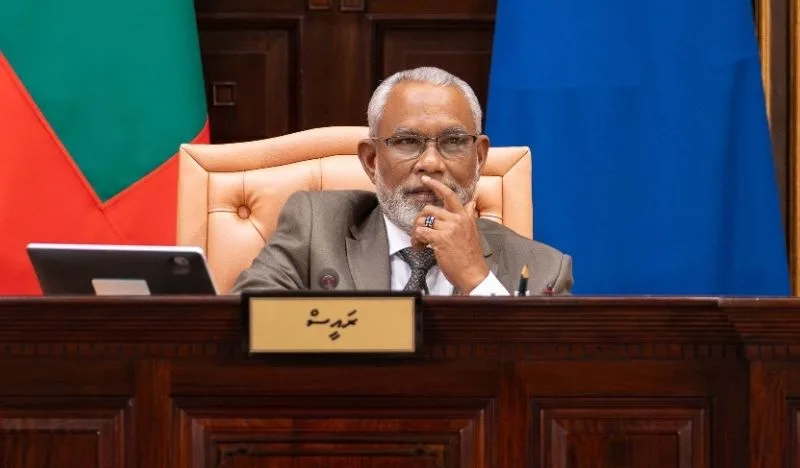
As President Dr Mohamed Muizzu marks three years in office, his administration stands at a defining crossroads. President Dr Mohamed Muizzu has firmly dismissed doubts about his reelection bid after 1,119 delegates at the ruling People’s National Congress (PNC) Congress unanimously awarded him the party’s 2028 presidential ticket without a primary. At the closing ceremony, Speaker of Parliament and PNC Chairperson Abdul Raheem Abdulla declared that the congress proved President Muizzu would comfortably secure a second term.
Yet the past three years reveal a far more turbulent reality. While the administration has moved aggressively to consolidate institutional power, its record has been marked by major electoral setbacks, abrupt policy reversals, persistent cabinet instability, and an escalating foreign currency crisis that continues to squeeze ordinary households.
Shifting Rhetoric Across Three Presidential Addresses
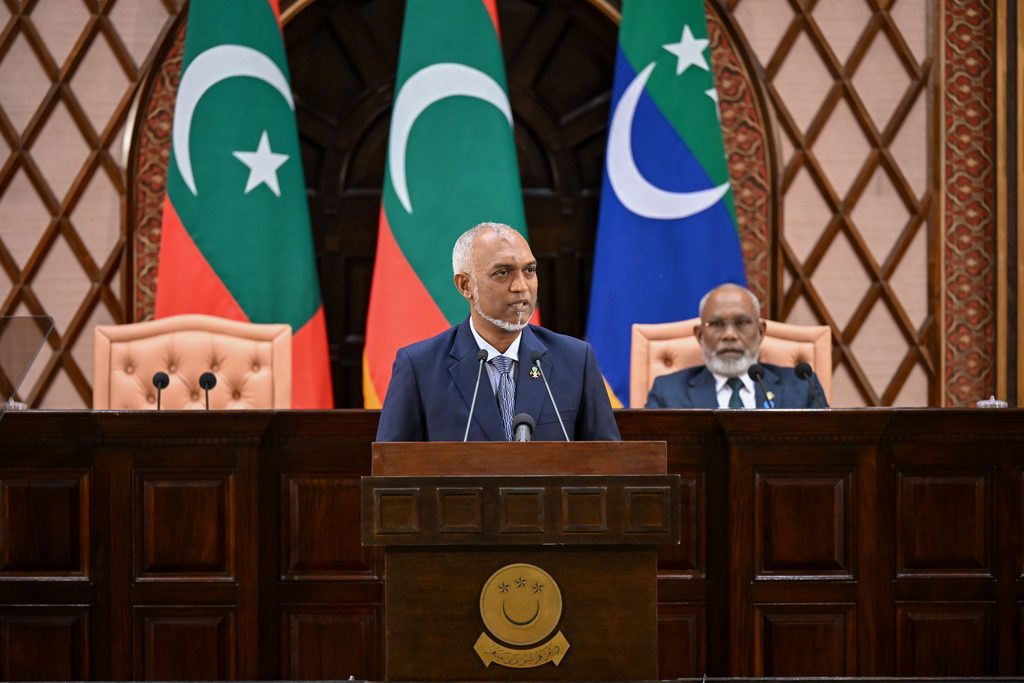
Across his first three annual addresses to the People’s Majlis, President Muizzu’s messaging evolved from emergency fiscal stabilisation and nationalist assertion in 2024 to legislative consolidation in 2025, and large-scale economic and territorial pledges in 2026.
Delivered less than three months into his term, his 2024 address centred on “Pro-Maldives” sovereignty, setting deadlines to withdraw foreign military personnel and halt money printing amid debt at 115.9 per cent of GDP while promising zero judicial interference, Judicial Service Commission (JSC) reform, council empowerment, media freedom, and flagship projects like Ras Malé.
By 2025, bolstered by a PNC parliamentary supermajority, his focus shifted toward constitutional anti-defection rules, a nationwide vape ban, accelerated expatriate deportations under Operation Kurangi, and the Foreign Currency Act, even as delivery timelines slipped for Ras Malé dredging, Gedhoruveriya flats, and Malé roadworks.
In 2026, he adopted a more assertive posture, explicitly rejecting secularism, establishing a Commission of Inquiry into the Chagos maritime dispute, and proposing 10 state-owned resorts to pay every citizen a minimum USD 400 annual dividend by 2030, while touting gross reserves exceeding USD 1.13 billion and a Sovereign Development Fund built past USD 275 million to meet the April 2026 sukuk maturity.
The Referendum Setback
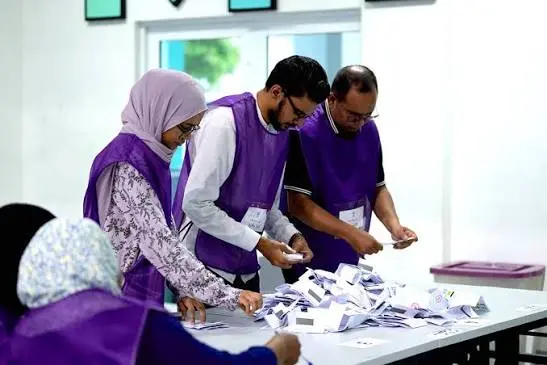
Despite institutional dominance, the administration suffered a major political blow in the April 2026 constitutional referendum. Voters overwhelmingly rejected the government-backed Eighth Amendment, which sought to merge presidential and parliamentary elections while shortening the 20th Majlis’s term by six months. Legal experts, including constitutional drafting committee chair Ibrahim Ismail and former Justice Husnu Al Suood, had warned that bundling multiple changes into a single ballot question violated Article 262’s clarity requirements. At the polls, 148,859 voters (68.74 per cent) cast “no” ballots, surpassing the 129,159 votes Muizzu received when winning the 2023 presidency, leaving the current Parliament to serve until May 2029 and prompting opposition calls for early elections.
For younger observers, the referendum reflects a deeper structural disillusionment that transcends party lines. Aiman, 27, a political science student at the Maldives National University (MNU), argues that despite the democratic transition, an autocratic political culture persists. “The President is our servant, and his job is to manage the government,” he says, noting that even the Dhivehi word verikan (rule) mischaracterises an executive meant to serve citizens. In Aiman’s view, Maldivian political parties lack genuine left- or right-wing ideological grounding or a coherent long-term national destination, leaving voters trapped in cycles of personality-driven governance.
Cabinet Roulette and Executive Churn
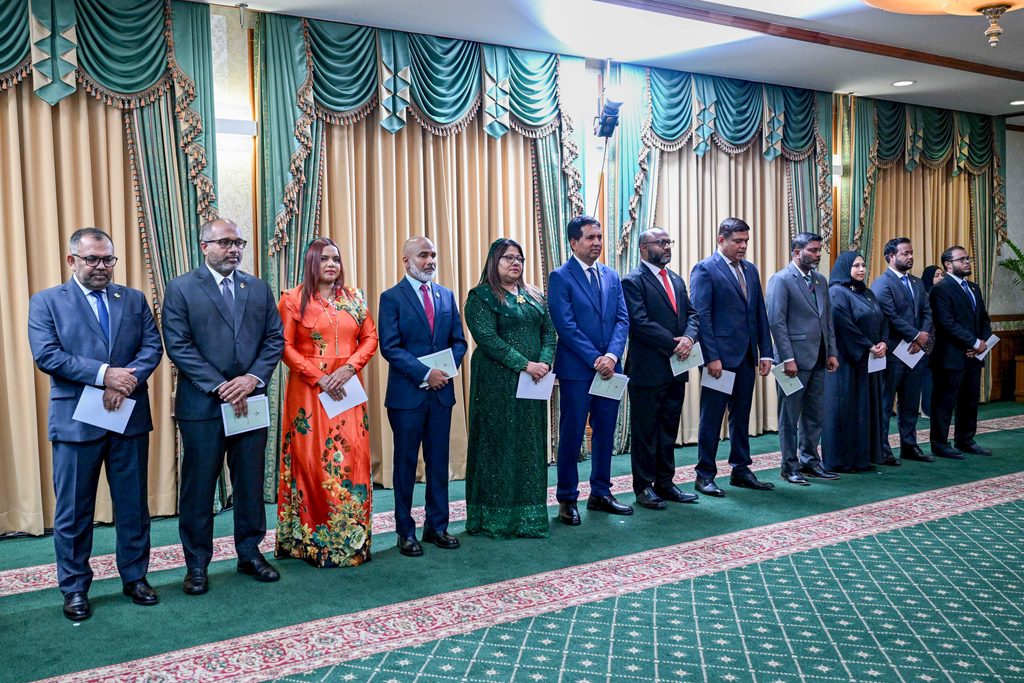
Maintaining stability within the executive branch has proven equally elusive. Having entered office in November 2023 with the largest cabinet in Maldivian history at 22 ministers, before even reaching the midpoint of his term, he had already carried out multiple cabinet reshuffles, subjecting his top team to repeated reorganisations, mergers, and sudden resignations.
The churn culminated in an extensive overhaul in April 2026, when 10 ministers resigned in a single day, and the President slashed the cabinet from 20 ministries down to 15, merging portfolios across tourism, environment, education, and social welfare. Even after Parliament approved the restructured lineup, instability persisted: Finance Minister Moosa Zameer resigned in June 2026, prompting the appointment of Hassan Zareer as the administration’s third finance Minister in under three years. Critics point to this continuous “cabinet roulette” as a driver of administrative bottlenecks and stalled project delivery.
Institutional Control: Parliament, Judiciary, and the Press
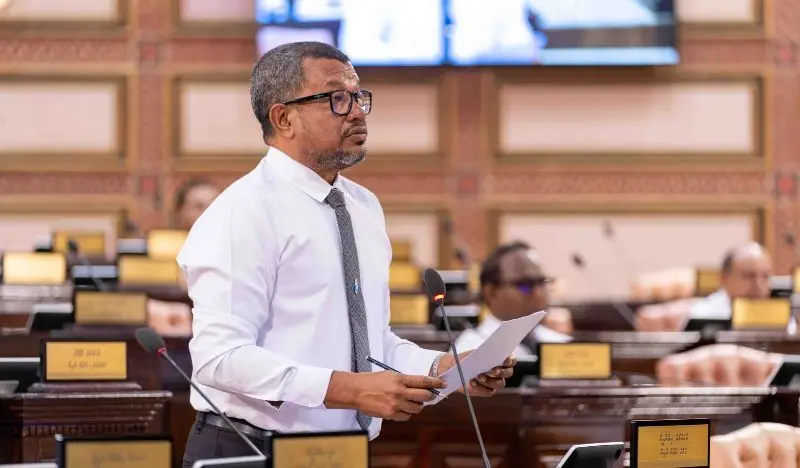
Over three years, the PNC supermajority has reshaped state institutions. In November 2024, Parliament passed a constitutional anti-defection amendment that strips MPs of their seats if they switch parties or are expelled, which critics argue subordinates lawmakers to party leadership. The People’s Majlis also voted to amend its Standing Orders to mandate an initial floor vote on resolutions before any preliminary debate can take place, establishing a procedural hurdle that effectively curtails automatic parliamentary debate on private members’ motions.
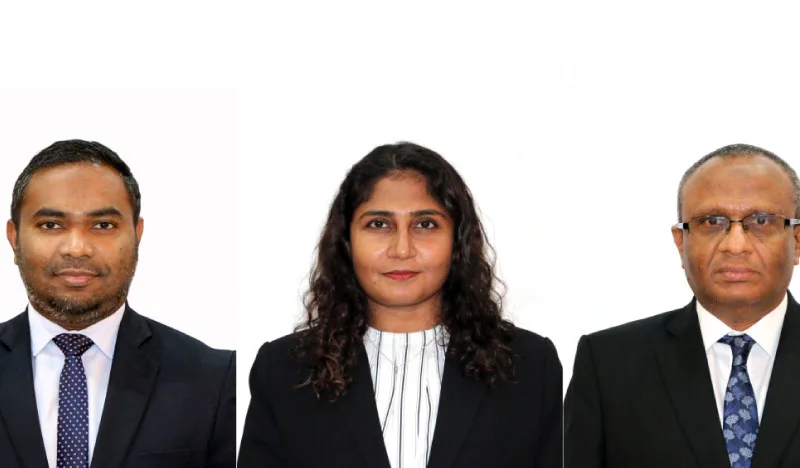
Months later, while the Supreme Court heard a challenge to that amendment, the JSC suspended Justices Azmiralda Zahir, Mahaz Ali Zahir, and Husnu Al Suood. Suood resigned, and Parliament dismissed Azmiralda and Mahaz amid due process criticisms from the Civil Society, Bar Council and HRCM, allowing Muizzu to appoint four justices to the five-member bench, even though prosecutors later closed the ACC case in September 2026 due to insufficient evidence.
Furthermore, on 15th July, JSC introduced a new regulation granting the commission the authority to remove chief judges of courts from their positions, while leaving the specific conditions or criteria for such removals undefined. The JSC reported changes in the composition of the judiciary in 2025. As of 31 December 2025, there were 204 judges serving nationwide. During the year, 34 new judges were appointed, including four to the Supreme Court, two to the High Court, four to superior courts, and 24 to magistrate courts. Of these appointments, only seven judges were women, all appointed exclusively to magistrate courts. During the same period, five judges retired, two resigned, and three were terminated from service.
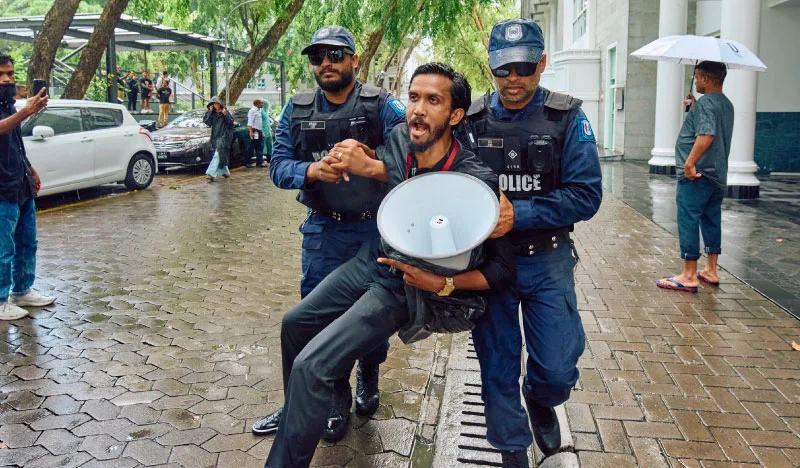
Media freedom also deteriorated despite early pledges against censorship. The 2025 Media and Broadcasting Regulation Act created a seven-member commission, shaped by executive and parliamentary nominations, empowered to fine and suspend outlets over broadly defined breaches of religious norms or public order. This legislation occurred amidst widespread protests from journalists, opposition groups, civil society and international advocacy groups. In addition to restrictions on press freedom, the right to peaceful assembly also came under strain during a multi-hour demonstration outside Parliament against the proposed media bill, which sought to replace self-regulation with a government-controlled commission, and escalated into clashes with police, who subsequently declared the gathering an unlawful assembly within a restricted security zone.
Tensions peaked in May 2026 when Adhadhu journalists Leevan Ali Nasir and Mohamed Shahuzan were jailed over coverage and inquiries surrounding a judicial gag order on an investigative documentary, while Adhadhu’s office was raided amid police probes into gazf (Islamic slander).
Policy Delivery vs. Economic Reality
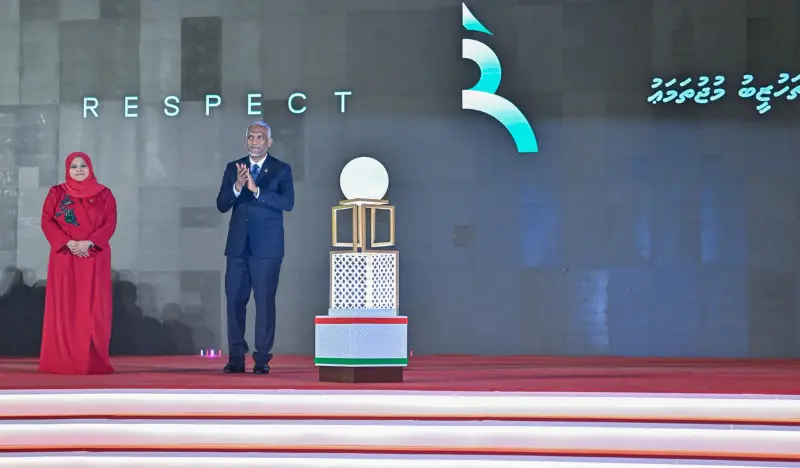
On the policy front, the government highlights decisive social and diplomatic moves: enacting a generational tobacco ban, expanding Aasandha to cover fertility treatments, deporting over 11,400 undocumented workers under Operation Kurangi, launching the five-year National Respect Initiative, and balancing bilateral ties with China, Turkey, and Pakistan alongside renewed financial swaps with India. Economically, supporters credit Muizzu with ending money printing and executing two consecutive budgets without supplementary top-ups.
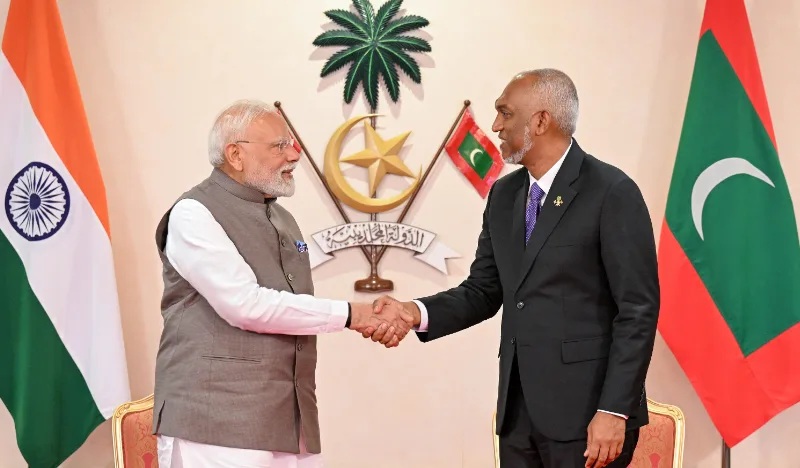
Economically, supporters credit Muizzu with ending money printing, executing two consecutive budgets without supplementary top-ups, and clearing USD 924 million in debt obligations during a critical 21-day window in April 2026, including the dreaded USD 500 million international sukuk maturity. Speaking at a press conference on 27th April, the president said that MVR 3.3 billion in outstanding dues have been paid to local vendors from 1 November 2025 to 23 April 2026. He further stated that the government has continued to service its foreign debt on time, noting that MVR 924 million was repaid. This included a USD 524 million sukuk repayment on 2 April and a USD 400 million settlement of the India swap facility on 23 April.
However, the proposed MVR 59.7 billion budget for 2027 underscores persistent strains. Recurrent expenses consume MVR 42.7 billion, while surging global fuel costs drove 2026 subsidies to MVR 4.3 billion, widening the 2026 fiscal deficit to 10.9% of GDP. Total public and guaranteed debt is projected to reach MVR 161.3 billion (124.5% of GDP) by end-2027. For ordinary citizens, parallel-market dollar premiums, sporadic medicine shortages, and housing delays remain pressing grievances.
Addressing Parliament’s Budget Committee, Governor Munawwar pointed to a stark leak in the national economy, revealing that whilst the tourism industry yields roughly USD 5.9 billion a year, only USD 3.8 billion ever enters the domestic banking system.
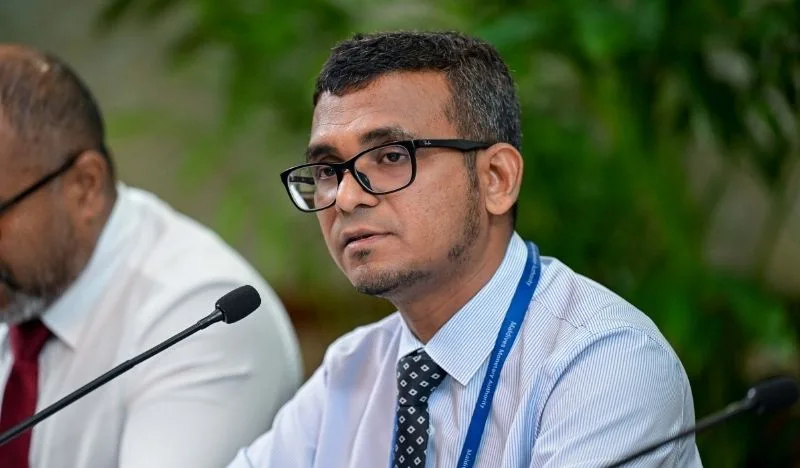
For ordinary citizens, macroeconomic survival has not translated into daily relief. Public sentiment captures a sharp divide between official optimism and household strain: while some point to expanded public-sector hiring and selective wage hikes, many Maldivians express deep frustration over surging food and fish prices, sporadic medicine shortages, stalled housing projects, and perceptions of entrenched patronage in state jobs and contracts.
At the heart of this cost-of-living squeeze is a persistent US dollar shortage that has pushed parallel-market exchange rates far beyond the official MVR 15.42 peg. Even after Parliament amended the Foreign Currency Act in August 2026 to require resorts to convert 40 per cent of their foreign currency earnings and imposed fines of up to MVR 500,000 on individuals for publishing black-market rates, critics argue the measures attempt to legislate away market reality rather than resolve the underlying liquidity crunch.
In Focus: Centralisation, Land Controversies, and the Ras Malé Debate
Conflict between central authority and local governance has defined much of the administration’s urban policy. In October 2026, the government reclaimed 14 prime land plots in Malé, including Sultan Park, Artificial Beach, the Fish Market, and the Carnival area, from the opposition-led Malé City Council, prompting Mayor Adam Azim to file legal action and warn that stripping council jurisdiction and slashing MVR 74 million in block grants cripples municipal services.
Meanwhile, the Carnival area itself was embroiled in controversy earlier in the year over disputed council-era leases, while Hulhumalé remains governed under the state-owned Housing Development Corporation (HDC) with prolonged delays by the corporation to transfer municipal services to Male City Council. This fueled accusations of uneven governance as rulings and deals around Hulhumalé plots, including Baarah MP Ibrahim Shujau’s MVR 9.4 million land purchase, drew public scrutiny.
Governance controversies also touched housing institutions directly. The December 2024 blaze that gutted the Housing, Infrastructure, and Environment ministries destroyed vital records; though authorities concluded in August 2026 that the fire originated from an electrical short circuit rather than arson, delays in disclosing lost records fuelled prolonged public suspicion. Furthermore, a recent audit report covering the period from 2018 to 2023, released by the Auditor General’s Office, revealed that the destruction of financial records was absolute and irreversible, leaving state auditors entirely unable to verify or account for more than MVR 120 million in public spending.
Elsewhere, the state-owned Hajj Corporation was forced in October 2026 to cancel preferential staff reservations for luxury apartments and penthouses at Hulhumalé’s Niyam Residence following public backlash over insider allocations.
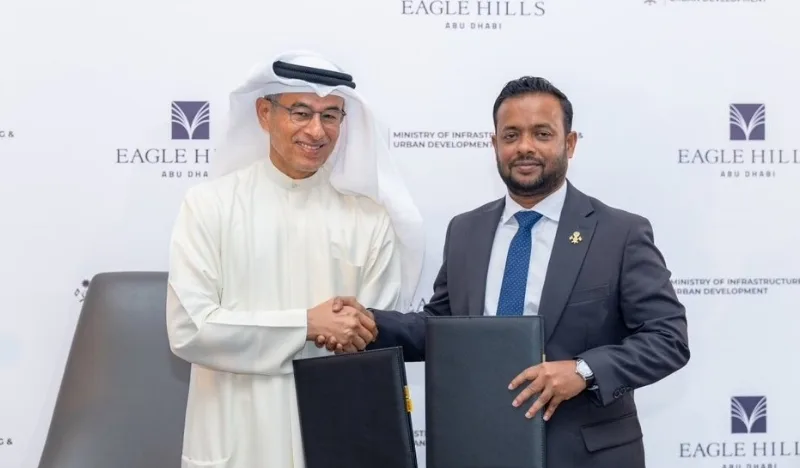
Nowhere is the debate over land, sovereignty, and long-term value sharper than in Ras Malé. Under the government’s proposed Real Estate Business Bill, backed by UAE-based developer Eagle Hills, foreign buyers can acquire properties on 99-year leases, sparking fierce pushback from opposition leaders and legal experts who warn of creating a “state within a state” and altering the nation’s demographic and constitutional fabric. Pro-government voices defend the project as a transformative, integrated real estate model capable of unlocking decades of economic value over a 25-year horizon and financing. Critics, however, question where promised development stands for the rest of the country’s inhabited islands, while environmental advocates warn that large-scale dredging compounds climate vulnerability at a time when warming seas and severe bleaching events are already threatening coral reef growth across the archipelago.
High Stakes on the Road to 2028
As President Muizzu’s administration marks three years in office, its record presents a far more complex picture, combining rapid executive action with deepening political polarisation, nationalist rhetoric, and mounting economic pressures. This raises a central question: can President Muizzu sustain the political momentum needed to secure a second term?
On paper, President Muizzu commands formidable political and institutional leverage: a disciplined supermajority, an uncontested party nomination, a reshaped judiciary, firm influence over state narratives, and a ruling PNC membership drive closing in on 100,000 members. That political machinery was further bolstered when the Adhaalath Party formally joined the ruling coalition, following a Consultative Council resolution committing the party to serving in the current administration and endorsing Muizzu for 2028.
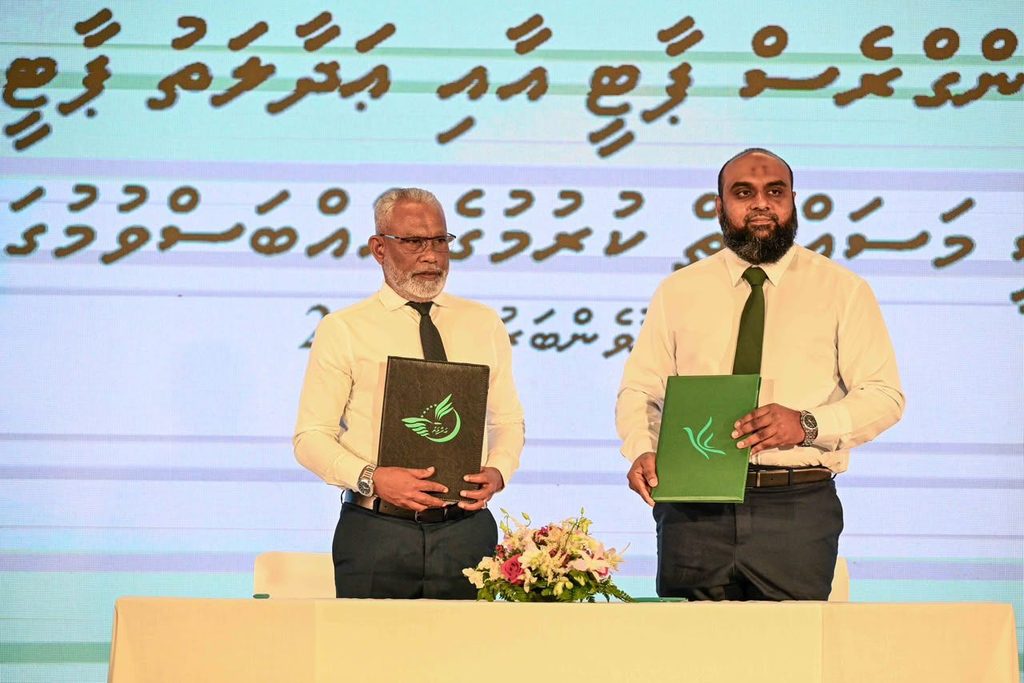
Yet the referendum defeat and local council losses demonstrate that party arithmetic and institutional dominance do not guarantee popular support. Unless the administration translates macro-level debt management and flagship projects into tangible relief on housing, healthcare, and foreign exchange, its path to 2028 will prove far steeper than the applause at the PNC Congress suggests.