September 2, 2026
Driven 'Senseless': Death After Death on the Roads




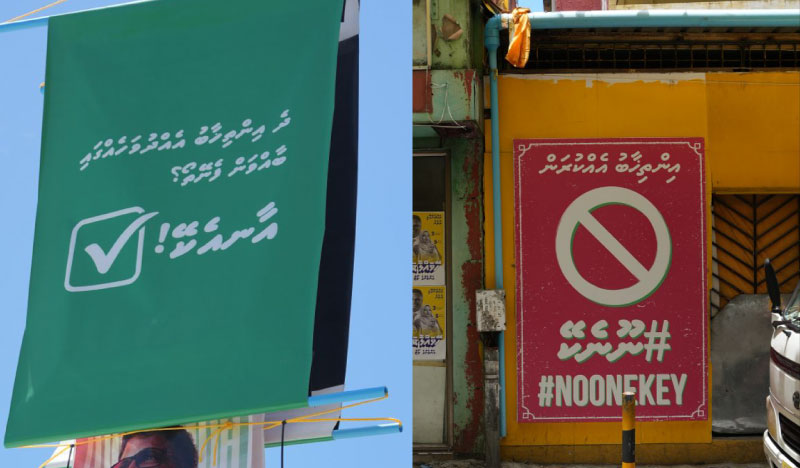
The recent amendment proposed to the Constitution of the Republic of Maldives is set to bring sweeping changes to the electoral system and the overarching structure of state powers. While the government maintains that these alterations are strictly a cost-cutting measure, legal experts are already questioning the constitutional validity of the referendum question framed to gauge public opinion. The opposition Maldivian Democratic Party (MDP) goes a step further, alleging that the administration is using the reform as a smoke-screen to achieve a far more deceptive political agenda.
Framing the Question: Clarity vs Ambiguity
Husnu Al Suood, a former Supreme Court Justice, highlights that any referendum called under Article 262 of the Constitution demands a question that is clear, direct, and specific to the issue at hand. Crucially, if an amendment seeks to alter the lifespan of the People’s Majlis (Parliament), the explicit consent of the public must be sought.
As it stands, the proposed referendum question asks voters: *"Do you approve the ratification of the Eighth Amendment Bill?"* Because the question targets the bill in its entirety, Suood argues that it remains entirely unclear how a citizen's vote would specifically apply to the clause regarding the shortening of the parliamentary term.
Suood, an accomplished legal scholar who has authored numerous texts on the Maldivian judiciary, noted that because the question is structured in a way that leaves voters guessing as to what exactly they are choosing, a referendum held under these conditions could struggle to meet constitutional thresholds of validity.
Furthermore, Suood believes that even if the referendum goes ahead in its current form, it technically cannot alter the duration of the parliamentary term. His reasoning is two-fold: first, the Constitution does not list the general ratification of a bill as a matter requiring a public referendum; second, any actual change to the Majlis's term can only take effect after the public's direct consent on that specific matter has been verified.
Ibrahim Ismail (Ibra), the former chair of the committee that drafted the Constitution, shared similar concerns. He insisted that a matter as monumental as changing the parliamentary term requires a standalone, targeted question.
> **Article 79(a) of the Constitution states:** > *"The term of the People's Majlis shall be five years from the date of its first sitting after election."*
Ibra pointed out that under Article 262, any constitutional amendment regarding this must specifically alter the defined lifespan of the parliament. In practice, if the term is to be changed from five years to another duration, that new number must be clearly stated, requiring a single question with a straightforward choice.
"What exactly is this current question asking?" Ibra questioned on X (formerly Twitter). "Is the parliamentary term to be four and a half years? Or is it five years?"
He described the proposal—which suggests shortening the term of the sitting parliament, holding an election, and then reverting to the original five-year cycle later on—as logically inconsistent and legally flawed.
Drafting Loopholes: Is it Truly Constitutional?
Suood also raised a technical concern regarding how Clause 4 of the amendment is drafted. He argues that instead of seamlessly integrating into the Constitution, the clause reads more like an ordinary piece of legislation. This distinction is vital; if the Constitution merely references an external piece of statutory law, that specific provision might lack constitutional supremacy. Consequently, without an explicit date written into the Constitution for the dissolution of parliament, the current Majlis could arguably see its term extended indefinitely.
Echoing these views, former Chief Justice Dr Ahmed Abdulla Didi stated that asking citizens whether a bill should be *ratified* is entirely improper, given that the Constitution already explicitly outlines the ratification process.
"The Presidential Decree should simply ask the public whether they agree with the specific changes and the parliamentary decision to bring about these reforms," Didi explained during a press conference. "Under no circumstances should it be framed as a question of whether to ratify the bill."
Synchronised Elections and the System at Large
The amendment also raises questions about the constitutional weight of temporarily shortening a parliamentary term only to restore it later. Ibra noted that these ad-hoc changes could trigger chaos if the presidency and vice-presidency were to become vacant midway through a term.
"We can certainly decide to hold presidential and parliamentary elections concurrently," Ibra wrote. "But what happens if the offices of the President and Vice President become vacant mid-term? Do we amend the Constitution again, cut the Majlis term short, and force another parliamentary election?"
The Real Issue Isn't Concurrent Elections
Virtually everyone agrees that holding simultaneous elections saves state funds. The opposition MDP has acknowledged this, and the concept itself is hardly new. Ahmed Nazim, the Deputy Speaker of the Majlis and a member of the Special Majlis that drafted the Constitution, revealed on X that concurrent elections were heavily debated at the time. Three distinct proposals were put forward back then, and Ibra himself was among those who advocated for synchronising the votes.
Responding to this, Ibra challenged Nazim to publicly share the full context of those historical debates, including the original reasoning, the structural differences between that parliament and the current one, and the political climate of the time. While Nazim did not reply to the challenge, he reiterated his strong stance that concurrent elections are highly beneficial and practical.
Mohamed Shihab, a veteran politician with 25 years of parliamentary experience, agreed that frequent, staggered elections are disruptive to the country. He argued that the ideal solution is to hold all major elections on a single, fixed day.
Similarly, former Attorney General Dhiyana Saeed, who also served in parliament, stressed that the Maldives' electoral framework is overdue for an overhaul. Reflecting on the past 15 years, she remarked that the current system has failed to produce a single parliament capable of effectively holding the executive accountable.
"Given our current reality, we have to look at this as a failed system," Dhiyana observed. "We are compelled to explore other options, and testing concurrent elections is an important step forward."
Riyaz Rasheed, who played a key role in drafting the Constitution as the then-MP for the Vilufushi constituency, expressed amusement that individuals who once fiercely advocated for combined elections are now opposing them.
However, the opposition's shift in tone appears to be driven entirely by distrust of the government's motives. The MDP openly alleges that the administration’s hidden agenda is to eventually extend the presidential term, accusing them of altering the constitutional landscape piece by piece to pave the way.
Seeking a Supreme Court Resolution
With the legal community sharply divided over the phrasing of the referendum question, the dispute has ultimately landed at the doors of the Supreme Court—the only institution capable of resolving this constitutional deadlock.
A team of lawyers has already filed two constitutional cases against the President’s Office. The lawsuits seek to halt the referendum entirely and declare the amendment bill void, arguing that the public vote as planned violates Article 264 of the Constitution.
One of the cases asserts that the Presidential Decree and the subsequent Elections Commission announcement include details that overstep the constitutional boundaries set for public referendums.
Separately, human rights lawyer Ali Hussain pointed out that the bill was forwarded to the President’s Office for ratification on 11 February. Although the constitution mandates a 15-day window for ratification, the executive failed to act within that timeframe.
"The 15-day window has expired," Ali Hussain stated. "Because the constitutional amendment was not ratified within the legally required timeframe, we are asking the court to declare the bill null and void."
The Maldives stands on the precipice of a profound shift in its democratic and electoral structure. However, the lack of clarity in the referendum question, combined with technical vulnerabilities in the bill’s drafting, means the legitimacy of the entire process will now be tested in court.
Legal experts agree that to avoid a constitutional crisis, the public must be asked a direct, unambiguous question as required by the letter of the law. At the same time, the electorate needs to fully understand what they are being asked to decide. While the government frames this as a simple matter of fiscal responsibility, it is fundamentally a question of constitutional integrity—and asking citizens to vote on a complex legal text without adequate public awareness only clouds the process further.