September 2, 2026
Driven 'Senseless': Death After Death on the Roads




The status quo is unsustainable
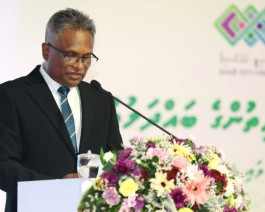
The emerging perspectives carry weight and merit careful consideration. We must initiate national dialogue on issues like halting the allocation of free land plots and ending the practice of determining rights based on registered permanent addresses.”
These were the words of Fayyaz Ismail, former Chairperson of the Maldivian Democratic Party (MDP), on 4 November 2025. Following this sentiment, former President Mohamed Nasheed proposed a "zero draft" aimed at systemic reform in the Maldives, leaving it to the public to fill in the details. However, an analytical look at the country’s political landscape and recent election outcomes reveals a glaring truth: the public had already sketched out and coloured in that picture long ago.
The real issue is that political leaders seem blind to this vision. Alternatively, they might be deliberately turning a blind eye, clinging to the existing status quo for their own political gain. This report highlights the fundamental shifts the Maldivian people are calling for, and which must be practically implemented, to steer the nation towards good governance.
1. The Shackles of the 'Permanent Address' and Voting Rights
The Maldivian administrative and political framework is built entirely around the concept of the "permanent address". This system is completely detached from reality and actively strips away the fundamental rights of countless citizens.
Ending Rights Tied to Permanent Addresses: Believing that a person’s birthplace or permanent address should dictate their access to housing and social benefits—even if they have lived, worked, and raised a family in Malé or another island for 30 years—is an archaic mindset. This remains one of the greatest sources of public frustration.
Voting Where You Live: In parliamentary and local council elections, citizens should not be forced to vote for representatives of an island they may never visit or live on. Instead, they must have the right to choose representatives for the communities where they actually live, pay taxes, and access public services. Severing the link to arbitrary permanent addresses would also significantly curb the influence of money politics during parliamentary elections.
2. Moving from Party Politics to National Governance
Once political parties secure power, they treat the state machinery as an extension of their own campaign offices. The public is desperate to break this status quo.
Prioritising the Public Over Party Members: The toxic culture of distributing civil service jobs, loans, and government contracts solely to ruling party activists must end. Governance must serve the entire populace, not just a select political tribe.
Bridging the Gap Between Bureaucrats and the Public: State policies are heavily skewed towards benefiting civil servants alone. Self-employed individuals (such as fishermen, farmers, and freelancers) and private sector employees are consistently excluded from pensions, loan schemes, and social housing initiatives. This divide must be bridged to ensure equal opportunities for all workers.
3. The Economic Abyss and State Spending
The Maldivian economy is walking a tightrope. With national debt skyrocketing, the public is demanding fiscal responsibility and immediate cuts to state expenditure.
Slashing Political Salaries: It is utterly unacceptable that politically appointed individuals receive higher salaries and allowances than highly educated and experienced civil servants. The state structure must be overhauled so that political appointees are never paid more than their career civil service counterparts.
Curbing Corruption and Financial Malpractice: One of the public's most urgent demands is the establishment of a robust, independent framework to halt the rampant theft and corruption bleeding state budgets and state-owned enterprises.
Reducing the Debt Burden: For too long, governments have burdened the state with unpayable, high-interest loans purely to fund short-term political gains. This practice must stop in favour of sustainable economic policies.
4. Overhauling the Development Model: Concrete vs. Votes
Historically, political leaders operated under the assumption that securing votes was simple: just dump rocks on a reef, reclaim some land, or build an airport. However, the political landscape has fundamentally shifted.
Concrete Doesn't Guarantee Votes: Recent elections have proven that asphalted roads, endless land reclamation, and regional airports do not win votes if they fail to translate into tangible, financial self-sufficiency for the residents.
Decentralising Beyond Malé: True development means alleviating the suffocating congestion of Malé by establishing high-quality healthcare, education, and economic opportunities across the atolls. The public wants a genuine system of decentralisation that actually elevates their standard of living.
President Nasheed’s proposed "zero draft" is far from blank. Through the ballots cast in the April elections and the opinions voiced across social media platforms, the Maldivian people have already clearly written the script.
As Fayyaz Ismail rightly pointed out, maintaining the old way of doing things is no longer an option for political leaders. The public’s thinking is miles ahead of the politicians. The ultimate question now is whether political leaders and parties will have the courage to realign their policies with this shifting tide, or whether they will consciously choose to plug their ears and protect their grip on power, ignoring the vivid picture the public has already painted.