September 2, 2026
Driven 'Senseless': Death After Death on the Roads




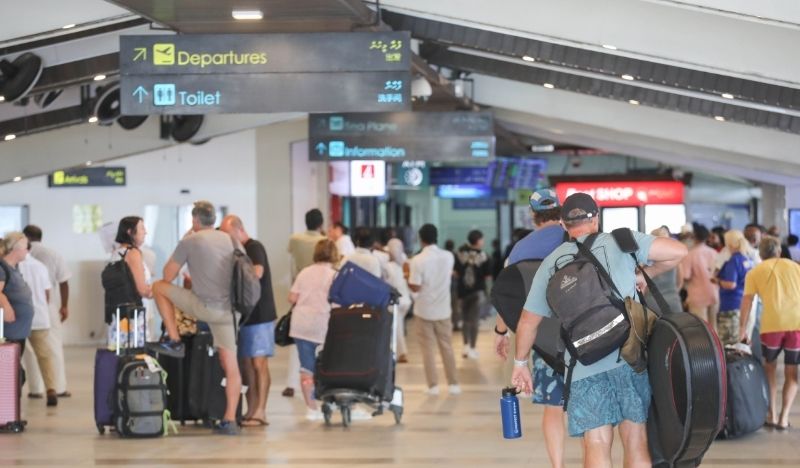
The Maldivian tourism sector, the bedrock of the archipelago’s economy, faces a complex matrix of external shocks. Historically reliant on traditional markets, the industry is navigating the fallout of bilateral diplomatic friction with India, shifting economic policies in New Delhi, and a structural reliance on the volatile, seasonal return of Chinese travelers.
A rigorous analysis of recent immigration data, central bank reports, and regional economic indicators reveals that while the Maldives has demonstrated structural resilience, its vulnerability to external political and macroeconomic variables remains pronounced.
A Good Recovery After Covid
One of the main reasons the Maldivian economy maintained its footing and did not collapse after the Covid pandemic was the reopening of the country's borders to tourists ahead of other nations. The result was that many people, who had been locked down for a long period, viewed the Maldives as the safest destination and traveled here—especially from neighboring India.
Following the Covid pandemic, India stood out as the best-performing market. The Maldives also paid special attention to the Indian market. The country was promoted in India through popular Indian celebrities. The improvement of the Indian market was indeed one of the biggest factors in recovering from the Covid pandemic.
The Impact of Political Conflict!
After Covid, India remained the number one market for the Maldives. It was also the fastest-growing market. This was not limited to just the middle class; the Maldives became a top destination for Indian businessmen, celebrities from various fields, and wealthy cricket players as well. Consequently, many people who emulated their lifestyles grew to love the Maldives. The Maldives found itself included in lists alongside countries like Europe and New Zealand, which were previously their dream destinations.
However, this growth stopped quite abruptly. With the change in government came changes in foreign policy, leading to a deterioration of relations between the two countries. Furthermore, due to the rhetoric used by Maldivian leaders, Indian political figures began retaliating against the Maldives. This caused public discourse to turn toxic and led to the launch of campaigns to boycott the Maldives. The impact of this was felt suddenly by the tourism sector. The citizens of India are patriotic people. The IT cells used to polish the image of Prime Minister Narendra Modi and the BJP government form a highly influential network. It was these very cells that spearheaded the movement to boycott the Maldives. As a result, tourist arrivals from India to the Maldives came to a near standstill.
According to estimates by some industry figures, this caused a loss of roughly two billion dollars to the Maldives. However, because other markets had also improved at the time, and the Chinese market—which had been completely halted due to Covid—began to revitalize, the overall economy did not feel the impact too severely.
Modi's New Appeal!
The entire global economy is suffering negative impacts due to the Iran war. Global inflationary pressures—driven partly by supply chain disruptions and energy market volatility linked to conflicts in the Middle East—have impacted major net-energy importers like India. The rise in petrol prices, increasing commodity costs, and the falling value of the currency have forced the government to implement strict austerity measures. The government is also pushing to curb spending.
Recently, in response to fluctuating oil prices and currency depreciation pressures, Prime Minister Modi recently issued public directives aimed at fiscal conservation. These appeals are mainly centered around cost-cutting measures. Among Modi's appeals, one of the most notable was his request to citizens to refrain from making any non-essential foreign trips at this time. In addition to this, Modi urged citizens to a temporary reduction in non-productive capital outlays, such as excessive gold hoarding.
This appeal by the Indian Prime Minister will directly impact the Maldives. The reason is that Modi called for a halt on travel just as the Indian market, which had plummeted due to the political disagreements that arose in 2024, was beginning to grow again. Following this call by Modi, BJP IT cells have been actively promoting this initiative and highlighting steps that can be taken to reduce the outflow of national foreign currency. Accordingly, a new campaign has begun to encourage people to seek domestic vacation opportunities within the country instead of traveling abroad for holidays. While the impact of this may not be felt immediately, it is estimated that in the long run, opportunities to promote destinations like the Maldives in India will face obstacles, causing the Indian market to decline once again.
The Chinese Market is Strong!
Looking at tourism statistics, the Chinese market is currently performing well. Especially during the European summer, when tourist numbers to the Maldives decline and the industry enters its low season, the tourism sector receives some vitality primarily because the Chinese, Indian, and East Asian markets perform well.
At present, China sits at the very top of the Maldivian tourism market. According to statistics, in April, China became the first country to cross the 100,000 tourist milestone within this year. It also shows a growth of 15 percent.
Although Maldivian tourism experienced significant growth earlier in March and April, that momentum could not be sustained this year due to the Iran war. A decline of approximately 21 percent was observed in March, which was a drop caused by the closure of Middle Eastern transit hubs. Nevertheless, industry figures believe that the numbers were maintained even at this level because the Chinese and Indian markets were improving.
However, the upcoming two to three months present a major challenge for the Maldives. Especially during June, because major school examinations take place in China, the rate of outbound travel by Chinese citizens will drop significantly. Nonetheless, the Chinese market will improve again in July. Since it is the school vacation period, the number of travelers will increase substantially.
Targeted Public-Private Partnerships
At this juncture, when the Indian market is facing a slowdown, it is wise for the Maldives to target the Chinese market once again. To maintain economic stability against this volatile backdrop, economic and tourism policymakers must transition from crisis management to long-term diversification.
It is prudent to take advantage of the situation and plan ways to increase tourist arrivals from China to the Maldives. While China provides immediate volume, completely alienating India removes a vital geographical and economic buffer. Formal diplomatic engagement with New Delhi is necessary to stabilize arrivals, particularly during Chinese travel off-seasons.
Improving political relations is particularly important at this time. A good relationship was established with China alongside the new administration. This is the moment to further strengthen that relationship. Both countries need to work together specifically to expand tourism and increase numbers. The citizens of China love to travel. The Maldives is included among their dream destinations. Therefore, tour operators and travel agencies must also pay special attention to this and capitalize on the coming days. Maldivian travel operators must deepen collaboration with Chinese digital platforms to maximize peak summer traffic, while simultaneously re-engaging with Indian travel trade partners to restore consumer confidence.
Relevant government authorities and policymakers must also take important steps at this time. There is a need to understand the impact of Modi's call on the Indian market and to identify measures that can be taken to minimize the negative effects. Furthermore, over-reliance on any single geopolitical bloc leaves the Maldivian economy exposed to sudden policy shifts. A resilient model requires a balanced portfolio that actively cultivates secondary markets across Eastern Europe, the ASEAN region, and high-spending traditional European segments.