September 2, 2026
Driven 'Senseless': Death After Death on the Roads




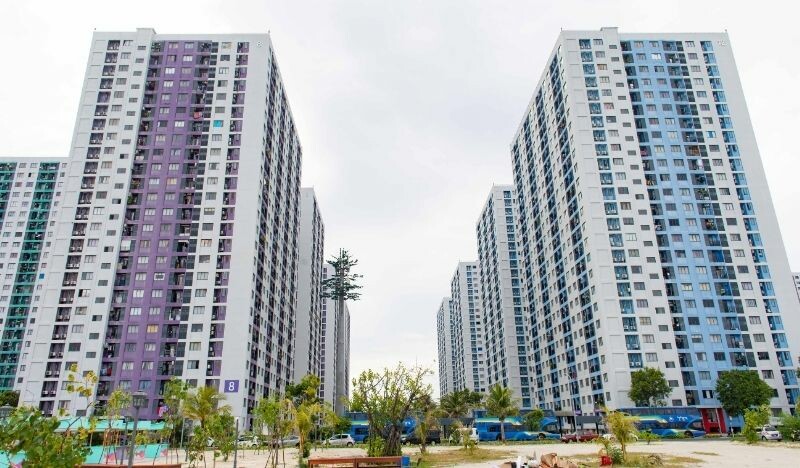
The rental crisis in Malé is nothing new. Countless people have spent their entire lives paying rent just to survive in the capital. This remains the country's greatest social anxiety.
While successive governments have deployed various strategies to resolve the issue, a solution remains elusive. Historically, administrations have focused entirely on lowering demand by constructing as many flats as possible. However, because the influx of people migrating to the Greater Malé area shows no signs of slowing down, no government has made any real headway. The root of the problem remains completely unaddressed.
A Cycle of Endless Complaints
Over the past two decades, various administrations have launched numerous housing schemes to tackle the crisis in Malé. During former President Maumoon Abdul Gayoom’s tenure, land plots were allocated to specific civil service cadres, alongside the construction of flats. Every subsequent administration up to the present day has continued building social housing.
The current government has also initiated its own housing projects. However, a recurring trend has emerged: the responsibility of handing over flats initiated by one administration almost always falls squarely on the shoulders of the next.
Despite the handover of numerous flats and row houses over the years, public complaints have never ceased. The reasons are manifold, but the most glaring is that those in desperate need of housing are routinely left off the final lists. Others find themselves omitted for arbitrary reasons. This usually happens because politicians meddle with the lists, combined with inherent flaws in the point-allocation criteria.
The criteria used by governments to distribute social housing have always sparked intense debate. One school of thought argues that the system fails because it attempts to assess current living conditions rather than prioritizing the duration of time spent renting in Malé.
Assessing living conditions objectively is incredibly difficult. Typically, evaluations focus heavily on the physical state of the current dwelling rather than the household income. Consequently, priority is often given to families earning substantial incomes who happen to live in cramped spaces, rather than those who are genuinely financially squeezed.
Conversely, another group firmly believes that the fairest and most logical metric for determining eligibility is a transparent tracking of an individual's or family’s long-term history as rent-paying tenants.
The Burden of Rent and Its Social Fallout
Families renting in Malé are forced to spend nearly their entire primary income on rent. To cover basic living expenses, households must pool together the earnings of both spouses, and often their working-age children. This financial strain forces families to cut back significantly on essential expenses like food, education, and healthcare.
Most everyday household goods are acquired through monthly bank installment plans. When emergencies strike, families are left with no choice but to take out loans or beg others for financial help. This is not merely a financial issue; it is a full-blown social epidemic.
A Social Epidemic
The rental crisis directly erodes family life. High rental costs mean multiple families frequently share a single apartment. The Greater Malé area is filled with families living in cramped conditions, where parents and children sleep in the same room, or are forced to sleep in the sitting room.
This causes severe social strain. Marital relationships break down under the pressure, children are inadvertently dragged into parental disputes, and families lose their privacy, exposing children to conversations and situations they should never have to witness. Having multiple families sharing a single space also breaches traditional family boundaries, causing private domestic issues to spill over into wider social circles—a harsh reality endured by many victims of exorbitant rent.
Furthermore, severe household overcrowding drives growing teenagers to spend most of their time outside the home. They often seek refuge at the homes of wealthier friends, causing parents to lose oversight and control over their children's lives.
Tenants also live under perpetual psychological distress. They carry a constant dread that an unexpected expense will leave them unable to afford the next month’s rent. The fear of a child falling ill—incurring medical expenses outside the state-funded Aasandha scheme—or a vital appliance like a phone breaking down is a source of chronic anxiety.
Why Long-Term Rental History Matters
The true purpose of social housing is to provide shelter to those who need it most and who lack the financial capacity to purchase a home on the open market. However, identifying these individuals is challenging.
The home visits and surveys conducted to assess living conditions are frequently manipulated. For instance, when officials visit to evaluate a applicant's living conditions, some applicants temporarily show a much more dilapidated property than the one they actually reside in. This is a known loophole exploited during housing assessments. Therefore, the most reliable remedy to this manipulation is to verify the duration of time an applicant has actually been renting. Proving a history of paying rent is far more critical than simply proving residency in Malé.
There are numerous instances where individuals who have spent decades paying rent, raising children, and exhausting their youth under the bondage of rent are denied flats. Meanwhile, individuals who have only recently moved to Malé, or who spent the majority of their lives living rent-free, are awarded housing. This is a profound injustice to long-term rent-paying families.
Restoring Trust in the System
Implementing a robust system that awards points based on verified rental history would minimize nepotism and political interference in flat allocation, thereby restoring public trust.
Admittedly, this system might not completely immune to fraudsters. However, a rigorous framework could easily verify claims. Even now, many people present fraudulent letters from Malé landlords to manipulate their residency duration and secure flats. While falsifying rental letters remains a risk, the government can counter this by increasing the number of mandatory supporting documents and establishing a transparent verification process.
Overcoming the Challenges
Naturally, such a system would face logistical hurdles. A major obstacle is the historical absence of formal tenancy agreements. Years ago, many properties were rented out entirely on verbal agreements. Furthermore, because these older agreements were never registered in court, they lack formal legal standing. Nevertheless, these hurdles can be cleared by using alternative verification methods:
Government Tenancy Registry: Establishing a national registry of tenants and rental properties.
Bank Statements: Accepting bank transaction histories as official proof of regular rent payments.
Utility and Institutional History: Verifying residency by cross-referencing the history of electricity and water bill payments, alongside school enrollment records of the applicant’s children in Malé.
Lessons for the Future
The biggest lesson from the past is that previous social housing projects have failed to offer a meaningful solution to this crisis. The strategy of trying to suppress demand is not a quick fix, as demonstrated by the Hiyaa Flats project and the ambitious housing schemes announced by the current administration.
While the current government has announced major housing initiatives, it is practically certain that most applicants will not be able to move into these properties within the current presidential term. Even where land plots have been allocated, it remains highly uncertain when these areas will actually become liveable.
Given that only a limited number of housing units reach the market at any given time, the system must prioritize those in absolute need. Factoring in a "long-term rental history" when setting eligibility criteria is no longer optional—it is a necessity. It is the only way to deliver justice to citizens who have spent their youth building this nation while spending the lion's share of their income on rent. The primary metric for ranking applicants on housing shortlists must be the duration of time they have spent paying rent.