September 2, 2026
Driven 'Senseless': Death After Death on the Roads




Anyone who has witnessed China’s rapid modernisation firsthand will come away with one undeniable realisation: the nation is practically 50 years ahead of most developing countries, and roughly 30 years ahead of major global powers. This is particularly evident in how deeply modern innovation has been integrated into everyday life and the wider economy.
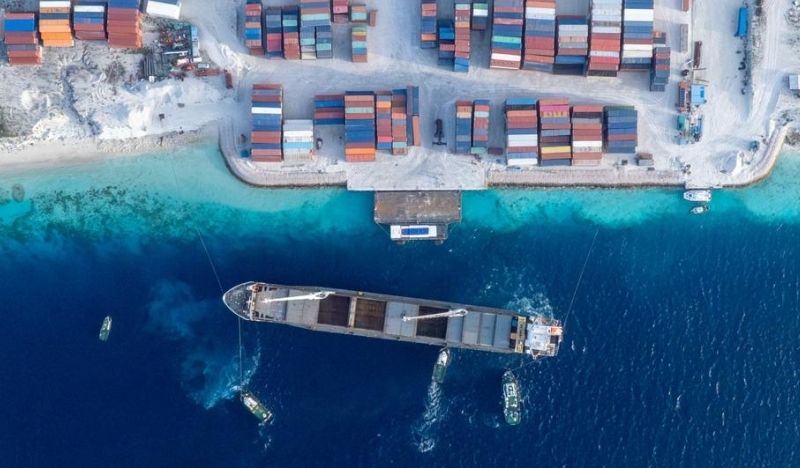
For a developing nation like the Maldives, China offers a wealth of blueprints, especially when it comes to mega-infrastructure projects. A prime example currently underway in the Maldives is the relocation of the Malé Commercial Harbour to Thilafushi. This massive undertaking has been in the pipeline for years; under the previous MDP administration, the plan was to build an entirely new port in Gulhifalhu. However, following adjustments made to the master plan by President Dr Mohamed Muizzu, the decision was made to shift all components of the Malé Commercial Port to Thilafushi instead. Work on this front is now moving at a rapid pace.
Developing the Thilafushi Port
Initially budgeted by the government at an estimated $250 million, the Thilafushi port project aims to establish state-of-the-art facilities. Once fully completed, it will feature a 600-metre international quay wall capable of accommodating three of the largest commercial vessels simultaneously.
Maldives Ports Limited (MPL) has been allocated 20 hectares of land in Thilafushi for this mega-project. The first phase is being executed by China Harbour Engineering Company (CHEC), following a contract signed in February 2026. CHEC is tasked with developing a 125-metre berth along with a dedicated harbour area for cargo-handling vessels. Their scope of work also includes installing heavy-duty port cranes, alongside conducting the necessary engineering surveys and design works.
Inside China’s Smart Ports
China’s ports are widely recognised as some of the most advanced globally. Even its inland river ports and dry docks are remarkably high-tech, with several facilities running completely automated operations powered by Artificial Intelligence (AI). As the Maldives builds its new infrastructure from scratch, adopting these modern, Chinese-pioneered technologies will be crucial.
1. Luzhou Port:
Located along the Yangtze River in Sichuan Province, Luzhou Port is a vital inland cargo hub connecting highways, railways, and maritime routes. It handles over 60% of Sichuan’s container traffic, making it a cornerstone of the provincial economy.
Luzhou has been transformed into a smart facility powered by a "5G Smart Port" framework. Since the rollout of its dedicated 5G private network, the port has introduced:
Digital Twin Systems: Virtual models that mirror real-time port activity.
IoT Management & AI Cameras: Automated tracking systems for security and logistics.
Smart Gate Systems: Truck drivers can pre-book appointments via WeChat. Upon arrival, license plates and container numbers are scanned and verified by the system in just 20 seconds.
Autonomous Electric Trucks: In 2024, the port introduced "Q-Trucks"—driverless electric vehicles operating on sensors, AI, and Baidu positioning systems. Dozens of these autonomous vehicles are now in active service.
The Results: These smart upgrades boosted operational efficiency by over 10%. Energy costs plummeted by more than 50% compared to traditional diesel trucks, cutting carbon emissions by 300 tonnes annually. Furthermore, removing human drivers from repetitive tasks has completely eliminated fatigue-related accidents.
Qinzhou Automated Container Terminal
This is China’s first fully automated rail-sea intermodal terminal and a flagship project of the Western Land-Sea Corridor. Its unique U-shaped design reduces equipment travel distance by 35% and cuts energy costs by over 30%. Because it is seamlessly synced with the adjacent railway network, real-time data sharing has boosted intermodal transfer efficiency by 50%.
Operating with 12 unmanned cranes, 42 automated rail-mounted gantry cranes, and 72 AI-managed Intelligent Guided Vehicles (IGVs), Qinzhou connects to 393 ports worldwide and 163 domestic railway stations across 18 Chinese provinces. It stands as a massive international gateway between ASEAN nations and mainland China.
Launch Date Set: 11 November 2027
As construction speeds up, President Dr Mohamed Muizzu has confidently announced that he will officially open the new Thilafushi International Port on 11 November 2027. The entire project timeline has been strictly aligned with this target, a date the President has reiterated across various public platforms, ensuring contractors keep their schedules firmly on track.
More Than a Port: An Economic Revolution
The Thilafushi relocation is not just an infrastructure upgrade; it is poised to revolutionize the Maldivian economy. Currently, lengthy cargo clearing times at the congested Malé port are a major driver of inflation. Bottlenecks caused by space constraints and weather-related disruptions frequently stall operations, driving up the cost of everyday goods for consumers.
The new port will dramatically reduce turnaround times and increase cargo handling capacity, streamlining the entire supply chain. Importers will benefit from smoother logistics, and the introduction of advanced technologies will fast-track operations.
Furthermore, the port will act as a catalyst for broader regional growth. Connected by the Greater Malé Bridge to the expanding residential hubs of Gulhifalhu, Thilafushi, ViliMalé, and the capital, the port area will open up vast employment opportunities and stimulate new commercial sectors.
Crucially, vacating the old harbor in Malé will free up premium waterfront land in the capital. Existing master plans suggest converting the old port area into a dedicated cruise ship terminal, public parks, and recreational spaces. While these transformations will take time to fully materialize, adopting China's approach to green energy, automation, and eco-friendly urban planning will be vital as the Maldives steps into the future.