September 2, 2026
Driven 'Senseless': Death After Death on the Roads




The core objective of the decentralisation system is to deliver state services closer to the people while reducing central government expenditure, ensuring that public funds directly benefit local communities. However, when the cost of delivering these localized services inflates excessively, the entire concept of decentralisation becomes distorted.
Beyond service delivery, the system is designed to encourage community participation in local development. By law, councils are required to hold town hall meetings at least twice a year to consult citizens and gather feedback—a standard practice in decentralized governance worldwide. Yet, these consultative meetings have increasingly turned into lavish, over-the-top events. Furthermore, island councils still maintain the habit of sending costly delegations to Malé simply to meet ministers regarding central government projects.
Male’ City Council's Multi-Million Expenditure
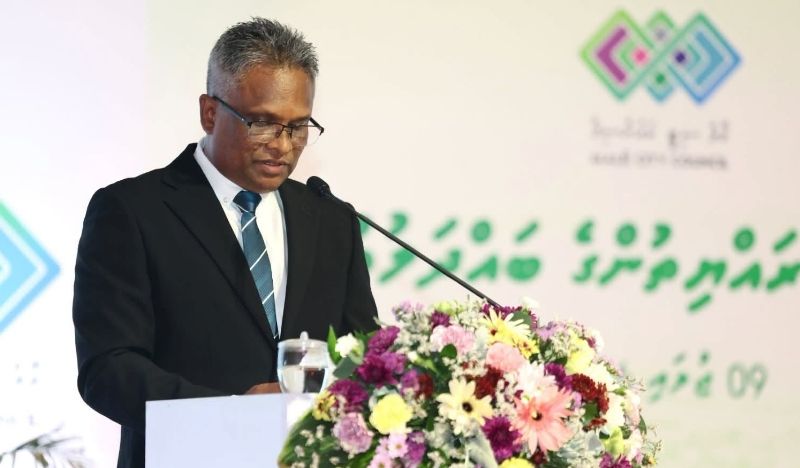
Male’ City Council recently hosted one of these required public consultations. It was an extravagant affair, complete with extensive hall drapery, decorations, and catered food and beverages. The cost for a single event exceeded MVR 500,000. Having held two such meetings this year, the total spending reached MVR 1.1 million.
A breakdown of the expenses reveals that MVR 360,000 was paid to an event management firm. Information obtained under the Right to Information (RTI) Act by a member of the public, Ahmed Aiham, showed that approximately MVR 170,000 was spent on live video coverage and production alone. Spending on event banners alone topped MVR 30,000.
The event management tender specified that the package included set-ups for 400 people—tables, chairs with covers, sound and lighting, podiums, stage backdrops, and catering. Yet, actual attendance at these public consultations remains notoriously low.
Widespread Public Backlash
When photos and videos of the event circulated online, public criticism was swift. This is not unprecedented; previous meetings faced similar backlash. Members of the public questioned why a civic consultation needed to resemble a lavish wedding reception, complete with mood lighting and heavy decor.
Questions were also raised regarding the catering logic. Male’ has a massive population, and these consultations are open to all residents. Catering specifically for 400 people raises obvious operational flaws: if more than 400 citizens attend, is the council expected to feed everyone, or only a selective few?
Social media users echoed similar concerns, questioning the necessity of providing meals and grand staging simply to consult the public. Mohamed Ali (Moga), a producer at Dark Rain Chronicles, pointed out that renting a fully equipped venue like Olympus—which includes sound, lighting, and large screen setups with higher seating capacity—would cost roughly MVR 100,000 at most.
Others noted that renting a school hall would cost no more than MVR 50,000. In fact, venue rentals are unnecessary altogether; pre-schools like Galolhu School fall under the jurisdiction of the Male' City Council and are available for free. Open public spaces like Sultan Park, the Artificial Beach, Carnival area, or Henveiru Park could easily host these gatherings by simply arranging chairs. Given that the opposition MDP holds a council majority, basic resources like seating could easily be sourced internally or through party inventory without incurring commercial event management fees.
The Mayor’s Defence
In response to media coverage, Mayor Adam Azim offered a political defense. He noted that during President Dr Mohamed Muizzu’s tenure as Mayor, when the PNC/PPM held the council majority, over MVR 2 million was spent annually on public consultations. In contrast, Azim highlighted that the current council spent around MVR 1 million for two meetings, effectively cutting costs in half.
While halving previous expenditure is a step forward, the broader public question remains: why spend this much at all?
The council possesses adequate internal staff and resources. Public council meetings are already live-streamed regularly using existing equipment. If media coverage is required, inviting local media outlets directly would ensure coverage without added expense. Moreover, the council maintains a dedicated media team and a high-salaried media advisor tasked with handling public relations.
Council Trips to the Capital
The issue of systemic waste extends beyond city consultations. Island and atoll councillors regularly travelling to Malé for routine matters directly undermines the spirit of decentralisation. In an era dominated by digital communication, flying to the capital to schedule back-to-back ministry visits is an outdated practice funded entirely by taxpayers.
Accommodating council delegations in Malé for days at a time imposes a heavy strain on local council budgets for travel, lodging, and daily allowances.
This represents avoidable waste. The Local Government Authority (LGA), as the oversight body for councils, should establish a structured, online framework for virtual consultations between local councils and ministry officials. Just as the law mandates biannual public town halls, legislative amendments could easily formalize scheduled virtual updates between ministries and local councils. Moving away from physical delegations waiting in Malé for ministerial appointments is essential to modernising local governance.
Fiscal Responsibility as a Shared Obligation
Mayor Azim has repeatedly highlighted broader state expenditure concerns. In challenging economic conditions, local councils must also exercise strict fiscal discipline, as council budgets are funded by taxpayer money.
Spending lavish sums on public town halls or funding trips to meet ministers in person runs counter to the core objectives of decentralisation. Simple backdrops and basic arrangements are entirely acceptable to the public. If logistical support is needed, councils can rely on their existing local and expatriate staff, or invite community volunteers.
While the council deserves acknowledgement for reducing spending from MVR 2 million to MVR 1 million, public sentiment is clear: further reductions are necessary. Eliminating extravagant event spending and unnecessary travel to the capital is vital for true fiscal responsibility.