September 2, 2026
Driven 'Senseless': Death After Death on the Roads




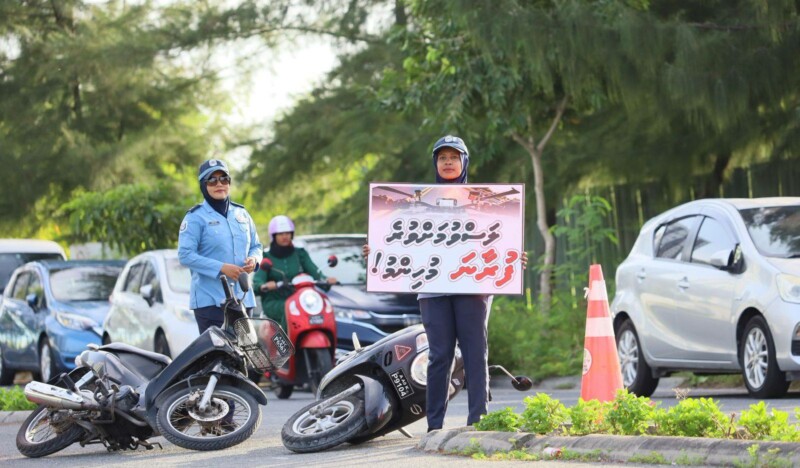
It is only when repeated warnings fall on deaf ears that journalists are forced to abandon restrained language and resort to terms rarely used in standard reporting. In Dhivehi, to drive "haebalivegen"—recklessly or senseless—means operating a vehicle in a state of suspended awareness, completely oblivious to one’s surroundings. Looking at the string of road accidents in recent days, no other phrase fits. The vast majority of these crashes have been caused by excessive speed and driving utterly senselessly.
Negligence Behind Every Crash
The sheer volume of vehicles on the roads of the Greater Malé Region has led to severe congestion. The traffic crisis escalated significantly following the connection of Malé and Hulhumalé via the Sinamalé Bridge. Consequently, the frequency of accidents across the bridge and the highway link road connecting Hulhulé to Hulhumalé continues to surge. Similar trends are visible in Phase II of Hulhumalé. Tragic, high-speed collisions have already claimed far too many lives.
A glance at just the past fortnight reveals severe harm to both human lives and property. In one grave incident on the Hulhumalé access road, a vehicle crashed into and extensively damaged the solar panels lined along the roadside. A small child was inside the luxury car at the time. Fortunately, the occupants escaped without major physical injuries, but the car was written off, and the solar panel array sustained heavy damage.
Just last Saturday night, tragedy struck near the Vinares Flats in Hulhumalé Phase II, leaving a nine-year-old girl critically injured. She succumbed to her injuries in the early hours of Tuesday morning while undergoing treatment. This heartbreaking event was born purely of negligence: a motorcycle clipped a pedestrian attempting to board a parked car from the roadside, causing the bike to lose control. The crash severely injured both the nine-year-old child and the 18-year-old female motorcyclist.
These are not isolated cases; numerous accidents have occurred over the past few weeks alone. Only a fraction make media headlines, but the trail of destruction left behind affects scores of lives.
Is Enforcement Adequate?
Following the fatality of the young girl, police confirmed that two cars were towed. Regarding the crash that shattered the solar panels, authorities stated that the driver's license was suspended. However, public outcry erupted when police revealed that instead of impounding the vehicle, it was handed straight back to its owner. Critics alleged double standards, suggesting leniency was granted simply because it was an expensive vehicle belonging to a wealthy owner.
When driving poses a direct threat to public safety, far stricter measures are required. Previously, public concern peaked over groups racing cars and motorbikes at high speeds on weekends. Police effectively curbed the practice through targeted enforcement. Yet, illegal and reckless driving persists. Stunt driving and dangerous maneuvers on the bridge remain an all-too-common sight.
Is a New Law Really the Solution?
In an attempt to ease congestion and improve safety on Malé’s roads, a decades-old statute was repealed this week, making way for a new Land Transport Act. The government stated that the primary objective of the new legislation is to establish a modern, robust legal framework that safeguards drivers, passengers, and pedestrians alike. The law introduces several key reforms.
Among the new measures is the introduction of fresh fees: individuals registering more than one vehicle under their name will face additional charges, fees on certain vehicle classes will rise, jaywalking outside designated crossings will carry fines, and stricter parking and stopping rules will be enforced. To combat overcrowding, the maximum operational lifespan of vehicles has been capped at 20 years. Furthermore, a three-year "sunset clause" has been incorporated specifically targeting the Greater Malé Region—the country's most congested zone.
Yet the critical question remains: has road safety in Malé been compromised all this time simply due to a lack of legislation? Scarcely. The failure lies in the non-enforcement and neglect of existing legal powers. The failure of authorities to cap vehicle imports into the Malé area was never due to a lack of laws. Roads have become death traps for drivers and pedestrians alike because of a pervasive sense of apathy—a state of being "senseless" shared by reckless drivers and enforcing authorities alike.