

Jamiyyath Salaf Urges Safeguards in Foreign Projects Amid Ras Malé Debate
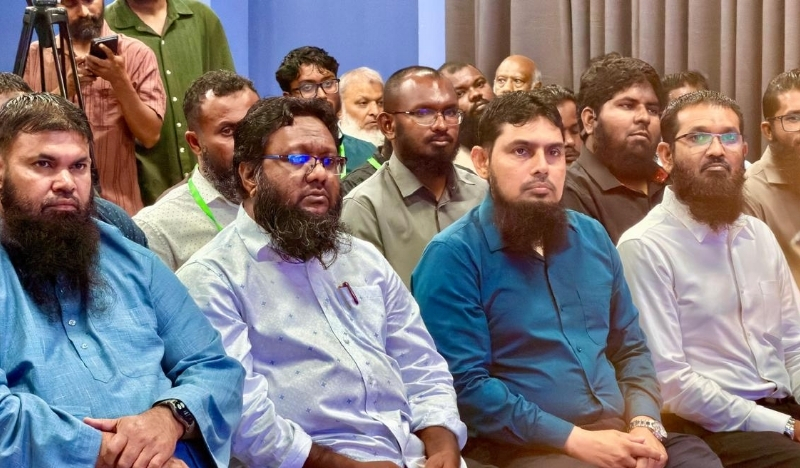
Photo: Jamiyyathul Salaf
Jamiyyath Salaf has urged the government to safeguard national sovereignty, Islamic identity and public interests in foreign investment projects, issuing eight recommendations amid controversy over the proposed Ras Malé development.
In an appeal submitted to the government, the organisation called for stronger safeguards in the legal frameworks and agreements governing Ras Malé and other foreign ventures. Its eight recommendations are:
advertisement

advertisement

- Protecting Islamic identity and national sovereignty.
- Safeguarding state sovereignty and strategic independence.
- Assessing demographic changes and security threats.
- Ensuring economic development delivers maximum benefit to Maldivian citizens.
- Establishing transparent and open policies.
- Balancing an open economy with national core values.
- Establishing a permanent monitoring system.
- Conducting social impact assessments.
https://t.co/BX0RHf6cOl— 𝐉𝐀𝐌𝐈𝐘𝐘𝐀𝐓𝐇 𝐒𝐀𝐋𝐀𝐅 (@JAMIYYATHSALAF) October 29, 2026
The appeal comes amid growing religious and political debate over the proposed Maldives Waterfront and Marina development, under which the government has agreed to lease 500 hectares of reclaimed land at Fushidhiggaru Falhu, designated as Ras Malé, to UAE-based developer Eagle Hills for 99 years.
Former President Abdulla Yameen has opposed the project, claiming it could facilitate the settlement of Jewish people in the Maldives and questioning whether Maldivians would accept living alongside Israeli families. He has also raised security concerns and argued that the agreement contradicts the government’s public support for Palestine.
Yameen’s remarks drew criticism from Homeland Security, Labour and Technology Minister Ali Ihusaan, who accused him of exploiting religious sentiment for political purposes and described the characterisation of the development as a Jewish settlement as misleading.
The debate has also prompted concerns from religious scholars. The Maldives’ Scholars’ Union, Ilmuveringe Gulhun, has warned that the project could have implications for Islamic identity, religious freedom, national sovereignty and foreign residency.
The government has defended the project, maintaining that the underlying land will remain state-owned. Housing Minister Dr Abdulla Muththalib has proposed safeguards to prevent Israeli nationals and Israeli-controlled entities from buying or financing properties in the development. These include screening buyers’ nationalities and beneficial ownership, with potential penalties for false declarations.
The Maldives has also amended its Immigration Act to prohibit entry on Israeli passports. However, the legislation does not prohibit entry by people holding dual nationality who travel on passports issued by other countries.
Jamiyyath Salaf said it began reviewing the Ras Malé project on 28 September and had since held meetings with relevant government authorities and gathered information through other channels. It said the project’s full scope could only be verified once the agreement was formalised and the relevant legislation enacted.
The organisation called for project agreements to be disclosed transparently, with public consultation and mechanisms to ensure compliance with Islamic and social values. It urged the government to prioritise national interests and ensure foreign investments deliver the greatest possible economic benefit to Maldivians.
Jamiyyath Salaf further called for safeguards to protect the Maldives’ Islamic identity and sovereignty, including measures to prevent Israeli citizens from benefiting from such projects.
The Ras Malé agreement has also faced scrutiny over transparency, state revenue and the legal basis for the 99-year lease. The government has said new legislation is needed to facilitate the proposed arrangement, while opposition figures have called for the full terms to be made public.