
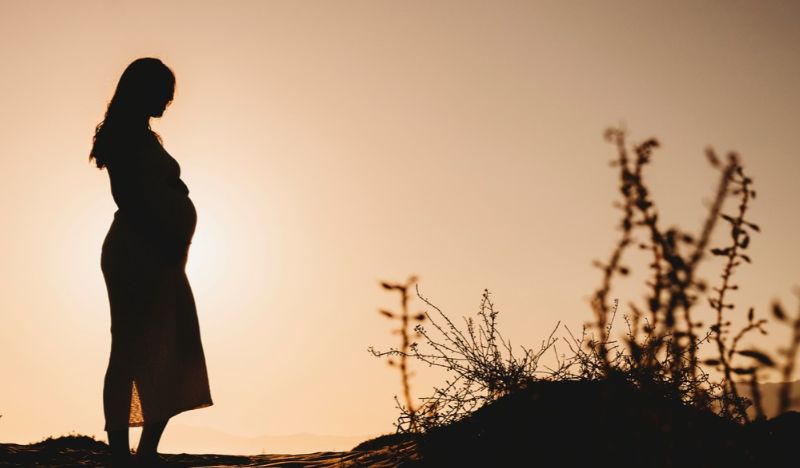
When Mohamed Hameed (not his real name) from Lhaviyani Atoll brought his wife, Aishath Samiya (not her real name), to Malé, they expected to be away from home for about a week.
Samiya had been experiencing severe abdominal pain, and consultations at their island hospital had brought little relief. On a doctor’s advice, the couple decided to travel to the capital for further tests. Their seven-year-old son, who has autism, and their 13-year-old daughter stayed behind with their grandmother.
They expected to be home soon. Instead, the trip changed their family forever.
After arriving in Malé, doctors recommended urgent tests. The results showed that Samiya had colorectal cancer.
Suddenly, Hameed was no longer planning a week-long stay in Malé. He was trying to get his wife overseas for treatment.
Samiya was diagnosed in 2021, and the care she needed was not available in the Maldives. Hameed had little money to spare, so he scrambled to arrange assistance through Aasandha and the National Social Protection Agency (NSPA). He contacted anyone he thought might be able to help speed up the process, including people he knew in government.
Within two days, and with help from several people, the couple were on a flight to Amrita Hospital in Cochin, India.
Samiya underwent surgery and remained in India for almost a month. Eventually, the couple returned home believing she had beaten the disease.
Their relief did not last long.
Her abdominal pain returned and grew worse. Once again, Hameed and Samiya left their children behind and travelled to India — this time not knowing when they would return.
As the weeks became months, Hameed found himself worrying about much more than his wife’s deteriorating health. Their two children were back home without their parents. His leave from work had run out. Eventually, he had no choice but to take unpaid leave, putting even more pressure on a family already struggling through a crisis.
About three months passed this way.
Samiya’s health continued to deteriorate. The journey would be the last Hameed and his wife ever made together.
She died while undergoing treatment in India, leaving Hameed to raise their young son and teenage daughter without her. Over the course of her treatment, he estimates that he spent around MVR 700,000, excluding financial assistance received through Aasandha and the National Social Protection Agency (NSPA). Much of that money went toward accommodation, food, transportation and other day-to-day expenses in India. For Hameed, a power-house technician, the amount represented a lifetime of savings, supplemented by financial help from family, relatives and friends—a staggering burden for an ordinary worker.
Their story is deeply personal, but the circumstances surrounding it are not unique. Across the Maldives, families affected by cancer find themselves navigating not only the disease itself, but travel, disrupted work, separation from their children and the enormous financial and emotional cost of seeking treatment.
Cancer does not affect the patient alone
advertisement

advertisement

Nearly seven years after Samiya’s death, Hameed is still trying to navigate the life she left behind.
Raising two children while holding down a job has not been easy. His aging mother and other family members help where they can, but much of the responsibility rests with him.
He has considered remarrying several times. But the decision has never felt simple. Samiya’s absence cannot be filled, he says, and he worries about whether another person could take on that role in his children’s lives.
Even after all these years, the grief has not entirely left him.
Cancer rarely affects just one person. A diagnosis can reshape the lives of an entire household — emotionally, practically and financially.
For Maldivians living outside the capital, that burden can be particularly heavy. Accessing specialised care may mean repeatedly travelling to Malé or temporarily relocating there. When treatment is unavailable in the country altogether, patients and their families may have to travel overseas, often for weeks or months at a time.
The costs that follow extend far beyond hospital bills.
There are flights, accommodation, food and transport. There is income lost when a patient or caregiver cannot work. There are children who need to be cared for back home and families suddenly split between countries and islands.
And amid all of this, structured psychological support can be difficult to access. There is no dedicated counselling framework through local councils for families going through these experiences. Those who seek support elsewhere can also face long waiting lists, making timely help difficult to obtain.
The financial cost of cancer
Aasandha and NSPA covered parts of Samiya’s treatment, but Hameed still spent heavily from his own pocket.
The family’s expenses were not limited to medical care. Travelling overseas and living abroad for prolonged periods required money they simply did not have. Hameed eventually had to turn to relatives and friends for financial help.
This is one of the contradictions of cancer care in the Maldives: treatment may be covered through public healthcare schemes, but becoming seriously ill can still be enormously expensive for a family.
For people living on the islands, the expenses can begin before treatment does.
Many basic diagnostic tests remain unavailable on many islands, while regional hospitals continue to face shortages in specialist doctors and diagnostic equipment. As a result, patients with serious health concerns are often required to travel to Malé.
And when the required cancer treatment or diagnostic service is unavailable even in the capital, the journey continues overseas.
Official referral figures show just how often that happens.
The numbers are worrying
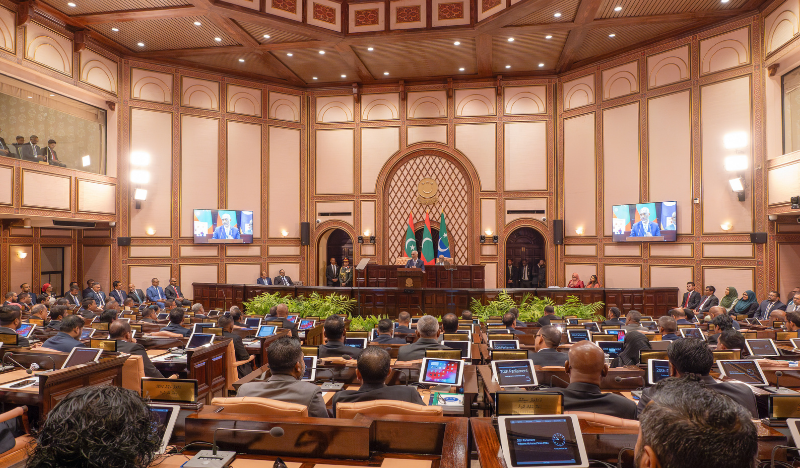
Speaking in Parliament, Health Minister Geela Ali said that last year alone, around 2,000 people had to be sent abroad for cancer-related diagnostic testing.
The continued increase in these referrals has become a growing concern.
Statistics from the past three years show that a significant share of overseas medical referrals involved cancer treatment and complex diagnostic tests that were unavailable locally. Between 2023 and 2025, a total of 483 patients were sent abroad specifically for cancer treatment.
The minister also told Parliament that while Aasandha-funded overseas referrals for some other diseases have declined, the overall number of referrals has not fallen significantly because the number of patients requiring overseas cancer treatment continues to rise.
At the same time, expanded testing and diagnosis across different parts of the country may also be making the scale of cancer in the Maldives more visible than before.
According to the Health Protection Agency (HPA)’s National Cancer Registry, approximately 2,000 people are currently undergoing cancer treatment in the Maldives, based on registered cases recorded between 2017 and the end of 2025.
Data released by the World Health Organization for World Cancer Day also points to the significant burden cancer places on the country. In 2020, cancer accounted for 17 percent of deaths in the Maldives, with women accounting for 57 percent of those deaths.
Breast cancer is the most commonly reported cancer among women in the Maldives, reflecting a pattern also seen globally. Among men, lung cancer is the most commonly reported form.
But while the number of diagnosed cases is concerning, another question remains difficult to answer: why?
What is driving the increase?
Early in the current administration’s term, research was initiated to better understand the factors behind the number of cancer cases being recorded in the Maldives.
The findings have not yet been made public.
The study, conducted with assistance from the World Health Organization, is intended to gather important information on cancer as well as non-communicable diseases more broadly.
Without detailed local research, it is difficult to determine what is driving changes in cancer incidence in the Maldives specifically. However, doctors and health authorities have repeatedly pointed to a number of modifiable risk factors associated with cancer and other NCDs.
Changing lifestyles
The way Maldivians live has changed considerably over the years.
For many people, everyday life now involves long periods of sitting and considerably less physical activity. Eating out at cafés and restaurants has also become a routine part of life for many.
Tobacco remains another major concern. Smoking affects not only those who use tobacco themselves, but also people exposed to second-hand smoke in public spaces.
More Gyms, Less Movement
While gyms and organised exercise have become increasingly popular among one segment of the population, that does not necessarily mean Maldivians as a whole are becoming more physically active.
Large numbers of young people and older adults still lead relatively sedentary lives.
At the same time, the growing use of dietary supplements, protein products and unverified herbal products has raised questions about what people are consuming in pursuit of weight loss, muscle gain or other physical changes.
The extent to which such products are being consumed in the Maldives, and any potential health implications associated with poorly regulated or unverified products, would require further study.
What Are We Feeding Our Children?
What children eat is another growing concern.
Energy drinks, sugary drinks and highly processed packaged foods have become a familiar part of everyday life. And for busy families, convenience can often mean reaching for ready-made snacks and packaged foods instead of preparing meals at home.
The problem is what comes with that convenience. Many of these foods can be high in sugar, salt and fat, and when they become a regular part of a child’s diet, they can increase the risk of obesity and other non-communicable diseases later in life.
With the Maldives already carrying a heavy NCD burden, prevention doesn’t begin in adulthood. It begins with the habits children grow up with.
What About the Food We Eat?
Concerns have also been raised about the food available to Maldivians — how it is grown, where it comes from, and how affordable healthier options actually are.
Agricultural production in the Maldives remains limited, leaving the country heavily dependent on imported fruits and vegetables. Locally grown produce can be expensive or difficult to find, while organic options are simply out of reach for many households.
There are also concerns about the use of pesticides, ripening agents and preservatives in food production and distribution.
But this is where an important distinction needs to be made. There is not enough local research to establish whether any of these concerns are contributing to cancer cases in the Maldives. Without that evidence, drawing a direct connection would be premature.
What doctors can point to much more confidently are the cancer risk factors we already know about.
Dr Mohamed Shifan, Director of the National Cancer Centre and a surgical oncologist, told MV+ that several unhealthy habits associated with cancer are widespread among Maldivians.
One of them is betel nut chewing, or dhufun.
He also highlighted tobacco use in its different forms, as well as diets high in processed foods and processed meats such as sausages and luncheon meat.
“Inadequate time dedicated to exercise and weight gain are also directly linked to cancer. These are a few critical factors, but they are entirely modifiable,” Dr Shifan told MV+.
And that last point matters. We cannot control every factor associated with cancer. But some of the risks Dr Shifan identifies are modifiable — meaning there are things we can change in our everyday lives to reduce them.
What If Cancer Treatment Didn’t Mean Leaving Home?
While comprehensive cancer treatment remains unavailable within the Maldives, several services have begun expanding across the country.
One significant development has been the introduction of chemotherapy services outside the traditional overseas-referral model.
According to the Health Minister, 39 patients were sent abroad specifically for chemotherapy last year. Overseas referrals are now increasingly reserved for more complex diagnostic procedures and treatments that remain unavailable locally.
Chemotherapy is currently available in Malé as well as selected regions.
Nine beds have been designated for chemotherapy services across Indira Gandhi Memorial Hospital and Hulhumalé Hospital. Hulhumalé Hospital alone provided services to 755 patients last year.
The government has also identified expanding diagnostic capacity as a priority.
Mammography screening for breast cancer has been established in the Malé region, five regional hospitals, Fuvahmulah Hospital and Baa Atoll Hospital.
With these services in place, more than 750 people had received screening within the Maldives by July.
Last year, cancer was diagnosed in 53 men and 67 women. The government has also announced plans to introduce cervical cancer screening services across all atolls.
The longer-term ambition is to expand the amount of cancer care available without requiring patients to leave the country.
The previous administration had planned to construct a dedicated cancer hospital in L. Atoll with assistance from India. Following further discussions, the current administration decided to relocate the project to the Malé region and broaden its scope to include treatment for other non-communicable diseases alongside cancer.
According to the Health Minister, a 25-bed multi-specialty hospital planned for Hulhumalé Phase 2 is targeted for completion before 2028. Basic cancer treatment services are expected to become available at the facility once it is operational.
For families like Hameed’s, these developments are about much more than expanding a list of services.
Every test or treatment that becomes available closer to home can mean one less flight, one less prolonged stay abroad and one less period in which a family has to separate simply because someone is sick.
The importance of finding cancer early
Cancer is generally far more manageable when detected at an early stage.
But for many people like Samiya, diagnosis comes only after symptoms become difficult to ignore, or cancer is discovered while doctors are investigating another health problem.
That makes awareness of symptoms, access to appropriate screening and timely diagnosis particularly important.
Regular health checks can also provide opportunities for doctors to assess an individual’s risk and recommend appropriate screening based on factors such as age, sex, family history and medical history.
For Hameed, however, the issue is no longer abstract.
He knows what a late diagnosis can mean.
His hope is that another family will not have to experience what he did — leaving home in search of answers, spending months moving through an unfamiliar healthcare system, watching work and family life unravel around them, and ultimately returning home without the person they left with.
Nearly seven years later, Hameed is still living with what cancer cost his family.